Description
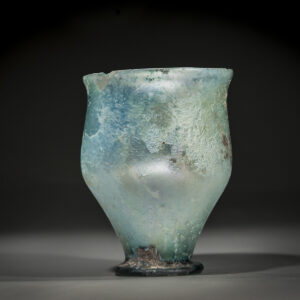
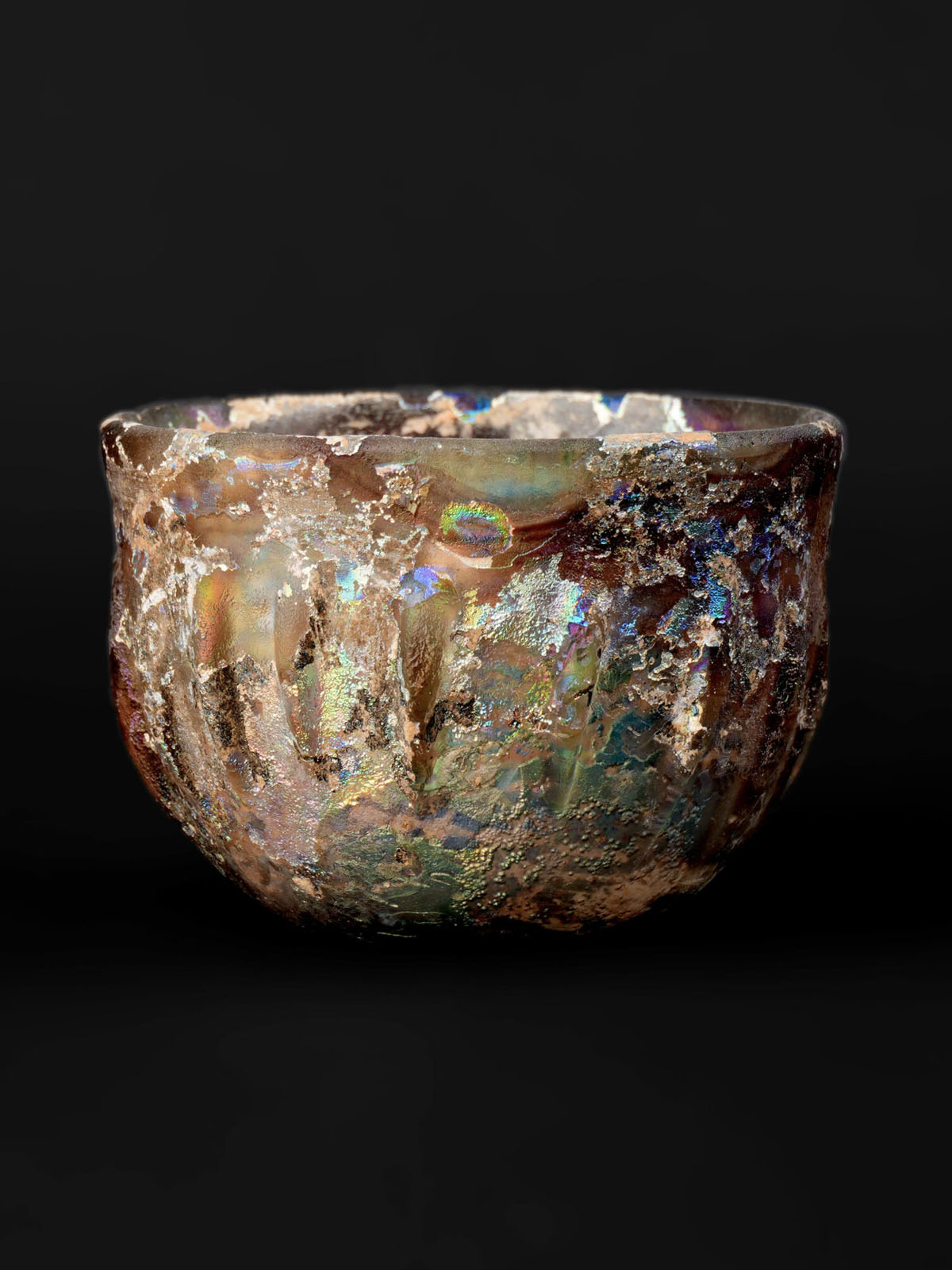
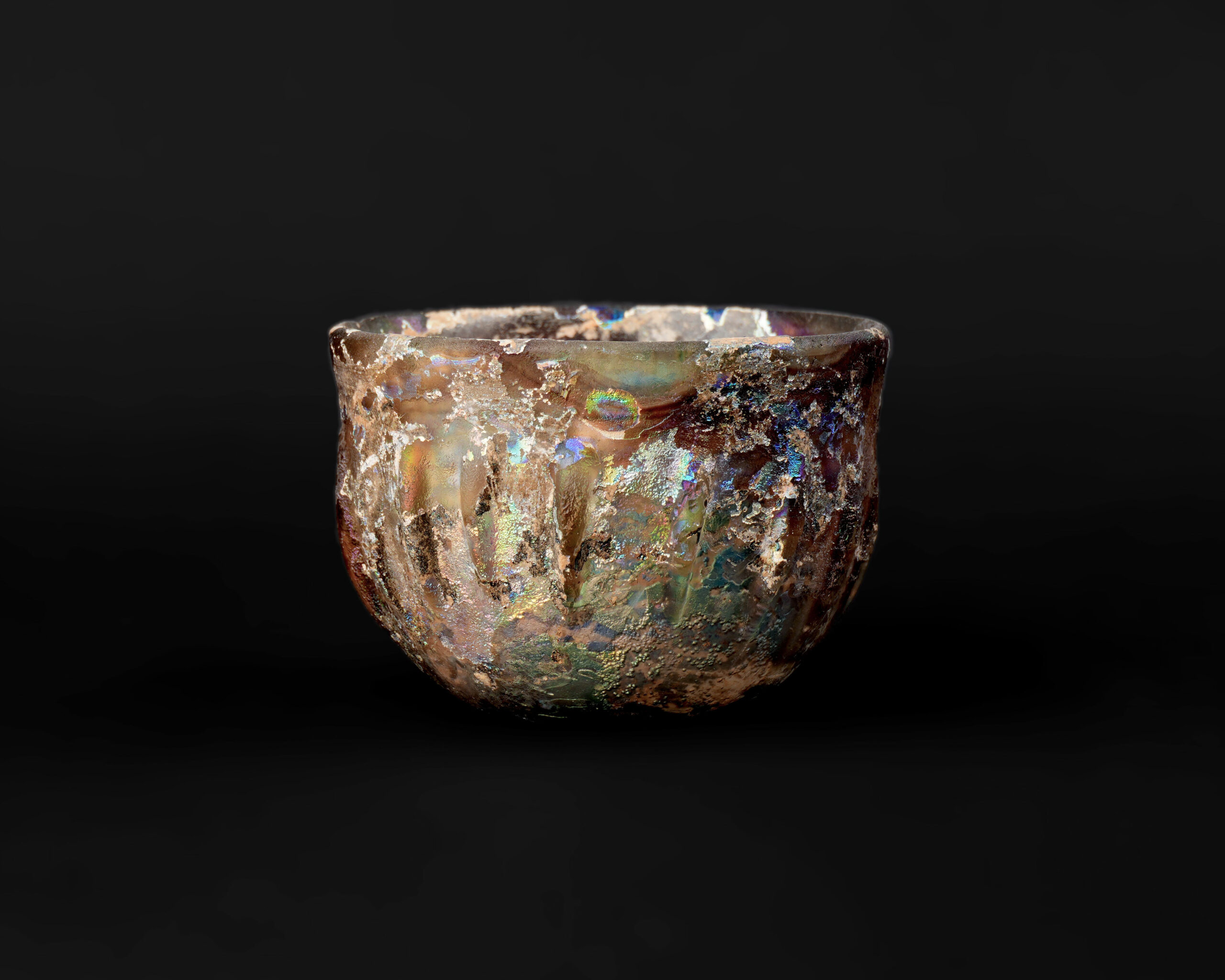
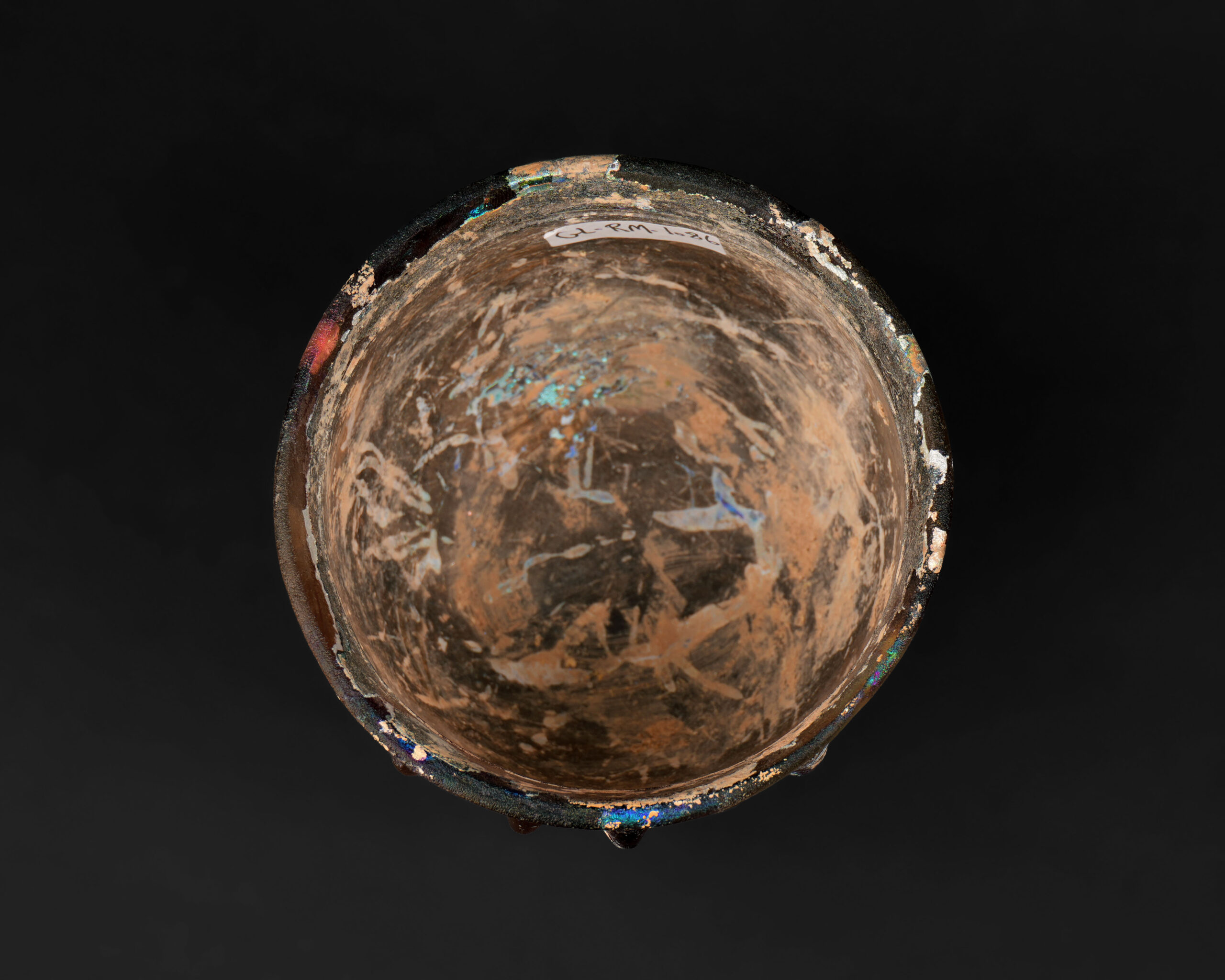
This elegant ribbed glass bowl exemplifies the artistry and technical skill of early Roman glassmakers. Crafted from a rare aubergine-hued soda‑lime glass, the bowl presents a gently flared rim and a rounded, harmonious profile with a lustrous, weathered surface that reveals a rich, multicolored iridescence developed through centuries of natural burial conditions. Measuring approximately [dimensions available on request], it is a compact yet striking domestic vessel.
The most striking feature of the bowl is its pronounced vertical ribbing, which encircles the body and lends a rhythmic, tactile quality to the form. Two finely incised concentric lines around the midsection provide an elegant counterpoint to the ribs, demonstrating careful finishing by hand. The surface iridescence, a product of long-term chemical interaction rather than modern treatment, enhances the deep aubergine tone and accentuates the delicate interplay of light across the exterior.
The workmanship shows mastery of early glass techniques—likely mold‑forming for the ribbed body with subsequent hand incision—resulting in crisp, well-executed details and a smoothly rendered rim. The uncommon deep purple color and strong iridescent sheen mark this piece as a particularly refined example of provincial Roman glass production.
Likely used for both every day and display purposes, this bowl would have served as a functional domestic vessel and possibly as a valued item within a household’s tableware. Its durable glass, sophisticated surface effects, and rare coloration reflect both the aesthetic sensibilities and material culture of the early Imperial period. Found in Sabaste; early Roman, ca. 1st century AD.REFERENCE #
GL_RM_1086
CIVILIZATION
Roman, 1st Century C.E
SIZE
D. 10.5 cm, H. 7.4 cm
CONDITION
Excellent condition
PRICE
$12500
PROVENANCE
Baidun Family Collection
Frequently Asked Questions
The bowl is made from a rare aubergine-hued soda-lime glass, showcasing a deep purple color that is uncommon in Roman glassware. This material choice highlights the technical skill and aesthetic preferences of early Roman glassmakers.
The bowl features pronounced vertical ribbing encircling its body, two finely incised concentric lines around the midsection, and a gently flared rim. These elements combine to create a rhythmic, tactile quality and demonstrate careful hand finishing and mold-forming techniques.
The iridescent surface developed naturally over centuries due to long-term chemical interactions during burial, rather than through modern treatments. This weathered surface reveals a rich, multicolored sheen that enhances the bowl's deep aubergine tone.
The bowl was likely made using mold-forming to create the ribbed body, followed by hand incisions for the concentric lines and finishing touches. This combination of techniques resulted in crisp details and a smoothly rendered rim, reflecting mastery of early Roman glassmaking.
The bowl probably served both everyday domestic functions and display purposes within a household. Its durable glass, sophisticated surface effects, and rare coloration suggest it was a valued item in early Imperial Roman tableware.
The bowl measures approximately 10.5 cm in diameter and 7.4 cm in height. It is in excellent condition, preserving its detailed ribbing, incised lines, and iridescent surface.
The bowl originates from the early Roman period, specifically the 1st century AD, and was found in Sabaste. It represents provincial Roman glass production from the early Imperial era.