Description
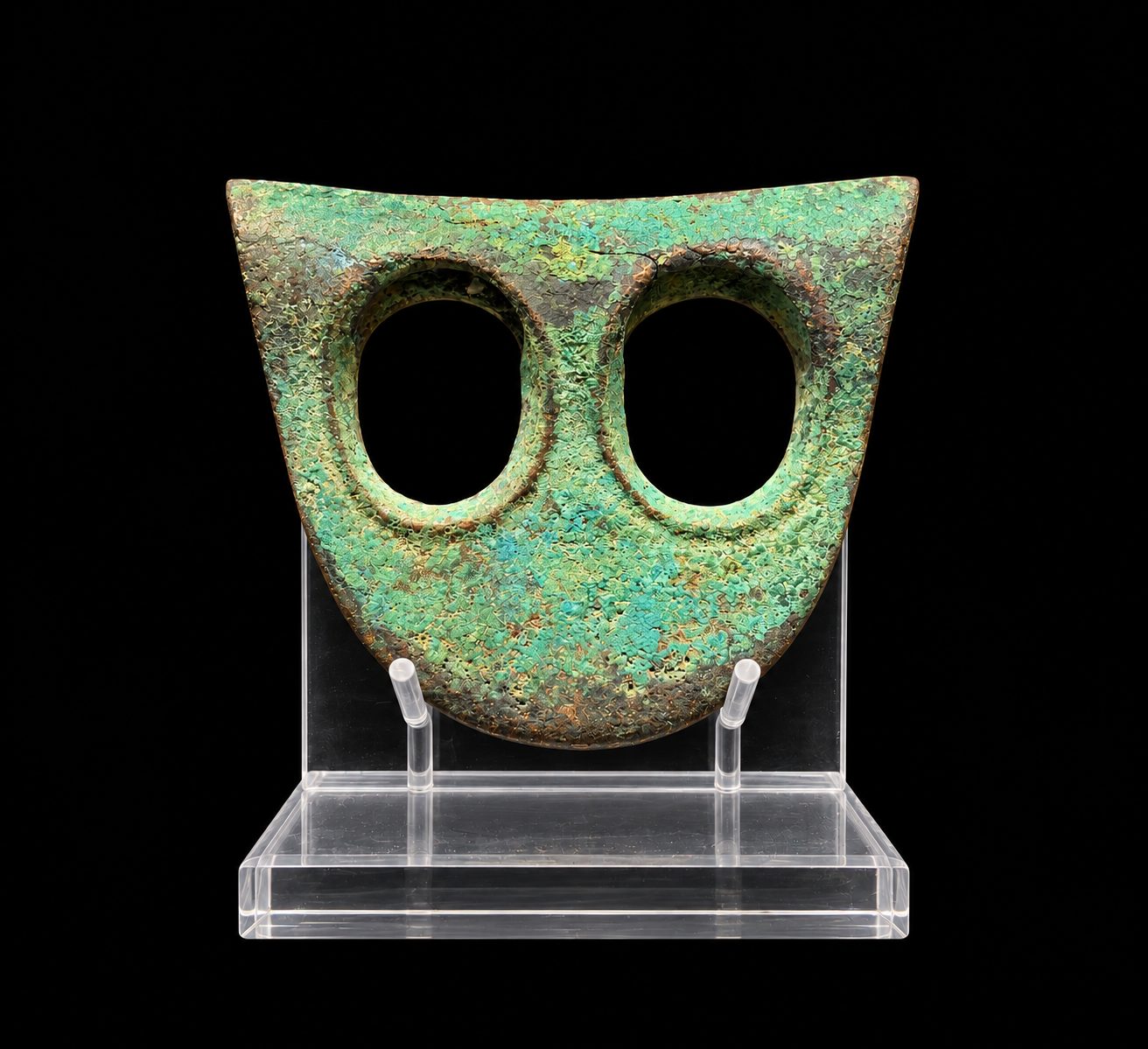
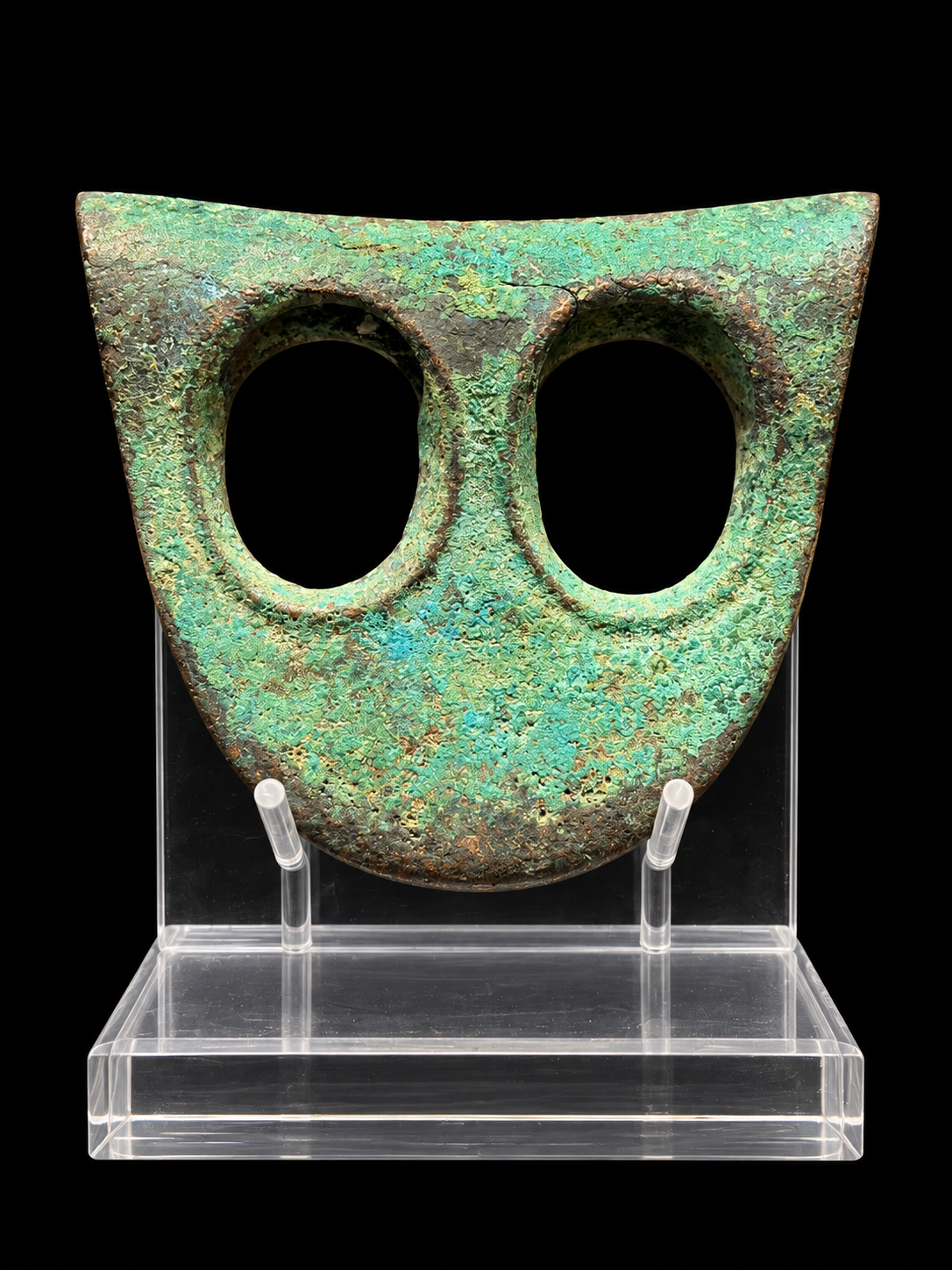
An impressive Canaanite bronze duckbill axe head, belonging to one of the most distinctive weapon forms of the Middle Bronze Age Levant. The type takes its modern name from the characteristic elongated, gently expanding blade, whose profile resembles the broad bill of a duck.
The axe is cast in bronze with a pronounced socket designed to receive a wooden haft. From the socket, the blade projects outward and expands toward a broad cutting edge, producing the elegant yet highly functional profile characteristic of Canaanite duckbill axes.
Such weapons formed part of the sophisticated bronze-working tradition that flourished throughout Canaan and the southern Levant during the Middle Bronze Age, a period marked by prosperous fortified cities, extensive regional trade, and highly developed metalworking. Duckbill axes are particularly associated with the martial equipment of this period and are known from archaeological contexts in the Levant, including burials where weapons were deposited alongside the deceased.
The surface retains extensive ancient oxidation and mineral patination, consistent with prolonged burial, while the overall form remains clearly preserved.
Significance
A characteristic and immediately recognizable example of Middle Bronze Age Canaanite weaponry, representing the advanced bronze metallurgy of the ancient Levant during the first half of the second millennium BC.
REFERENCE #
WP-CN-1013
CIVILIZATION
Canaanite. Middle Bronze Age Circa 2000–1550 BC
SIZE
L. 7.5 cm, W. 9 cm
CONDITION
Very good ancient condition, with surface oxidation, mineral deposits and patination consistent with age. The cutting edge and socket remain substantially preserved.
PRICE
$2800
PROVENANCE
Baidun private collection