Description
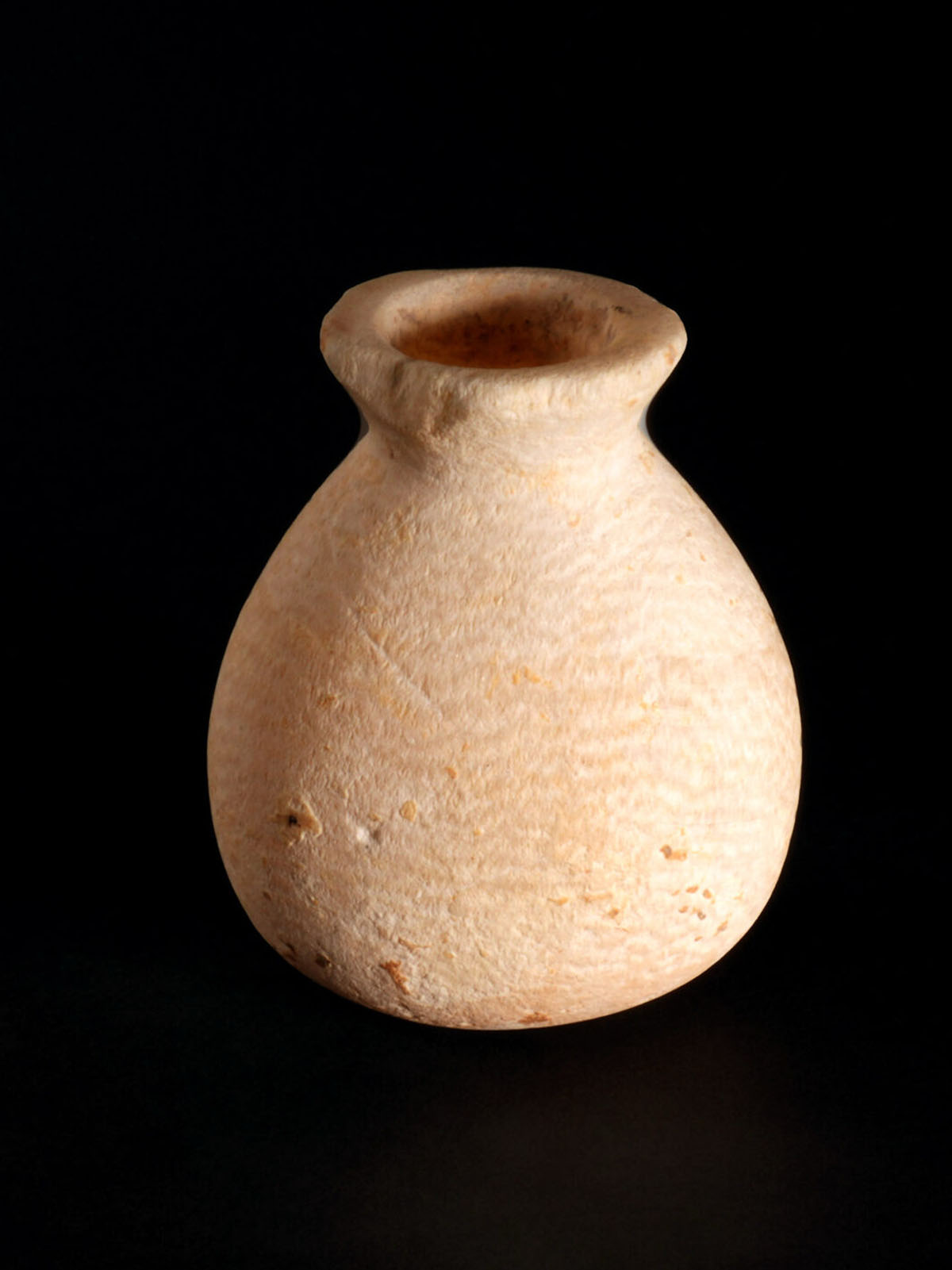
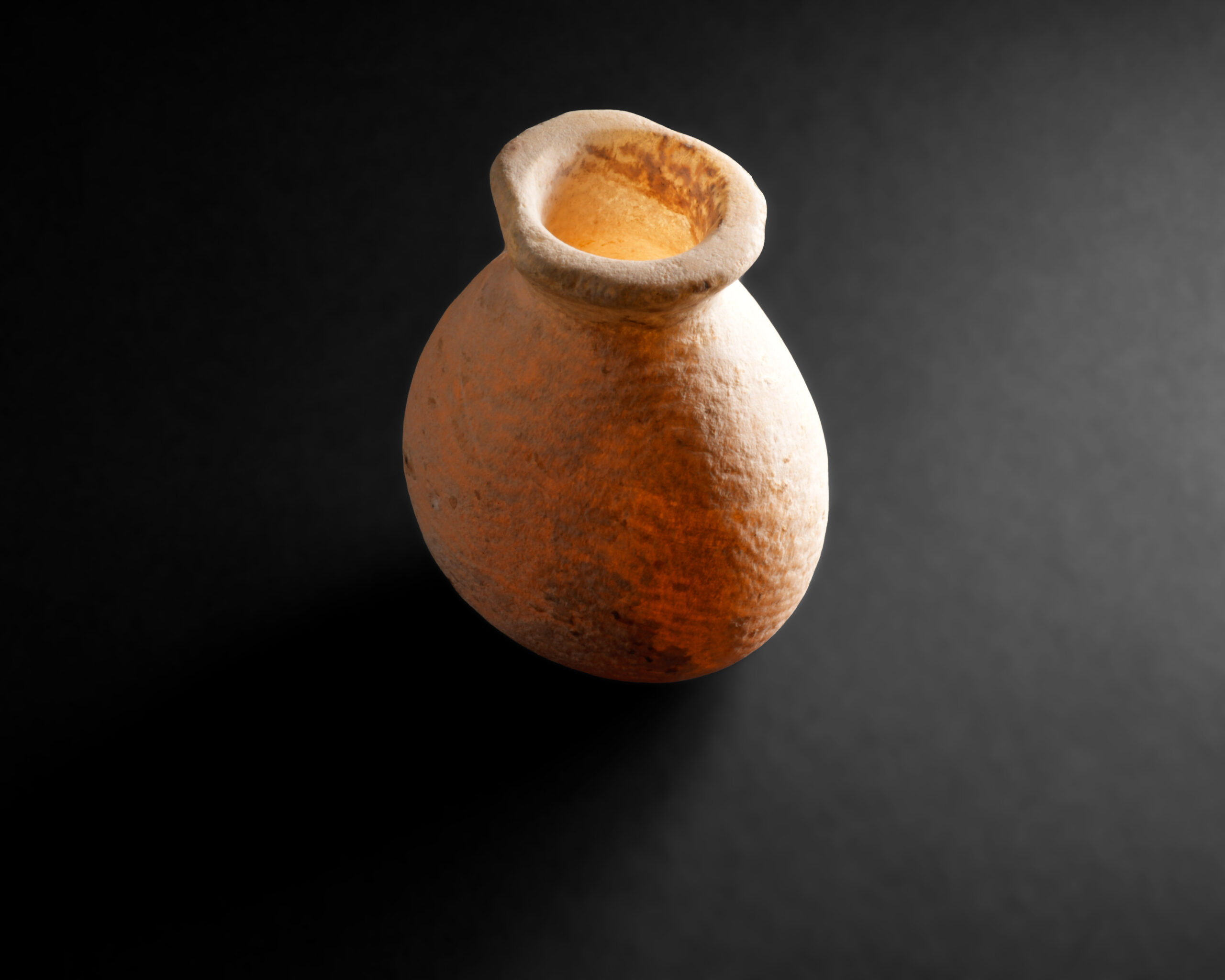
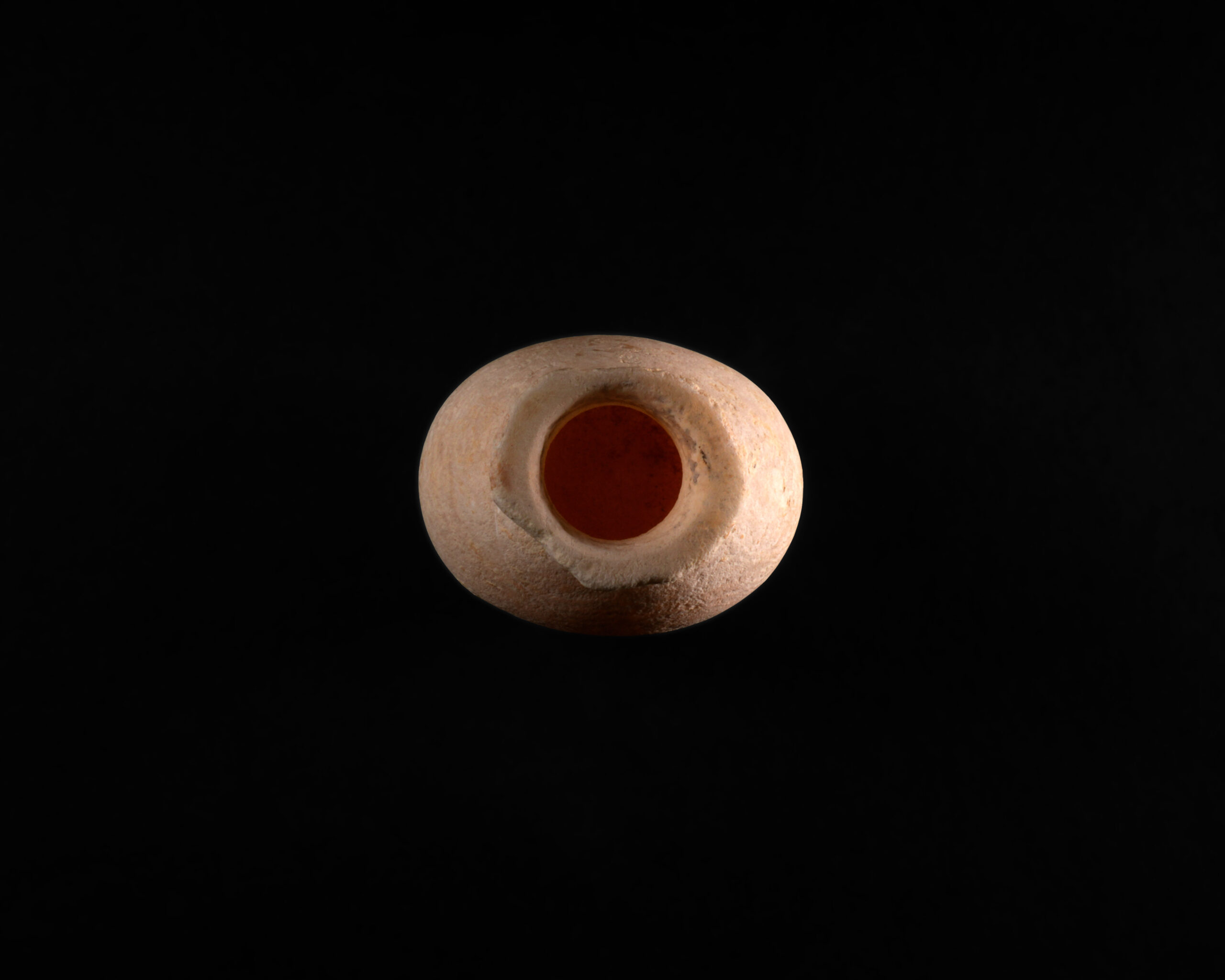
This elegant translucent alabaster perfume flask exemplifies the artistry and craftsmanship of Israelite artisans of the Iron Age, First Temple Period. Crafted from fine, translucent alabaster, the flask presents an ovoid body with a narrow, well‑formed neck and a gently everted mouth, its surface smoothly polished to reveal the subtle veining and soft luminosity of the stone.
The most striking feature of the flask is its delicate, refined profile and the way the translucent material captures and diffuses light, lending a quiet, luminous quality to the form. The workmanship demonstrates mastery of stone‑carving techniques, with a precise, symmetrical shape and a satin finish that highlights the inherent beauty of the alabaster. Any surviving tool marks are minimal and secondary to the overall polished presentation.
This object likely served both personal and ritual functions, used to contain precious oils or perfumes for daily grooming, anointing, or sacred ceremonies. Its refined material and careful execution reflect the value placed on aromatic substances in Israelite society and suggest ownership by an individual of some standing. Found in Jerusalem. Iron Age, First Temple Period (circa 10th–6th centuries BCE).
REFERENCE #
ST-22470
CIVILIZATION
Israelite, 1200 B.C.E. – 800 B.C.E.
SIZE
L. 7.5cm
CONDITION
Fine condition
PRICE
$2300
PROVENANCE
The Baidun Collection
Frequently Asked Questions
The perfume flask is crafted from fine, translucent alabaster, a material known for its subtle veining and soft luminosity. This choice of stone highlights the artistry and craftsmanship of Israelite artisans during the Iron Age.
The flask dates back to the Iron Age, specifically the First Temple Period, which spans approximately the 10th to 6th centuries BCE. This period is significant in Israelite history and culture.
The flask was likely used to contain precious oils or perfumes for personal grooming, anointing, or sacred ceremonies. Its refined craftsmanship and material suggest it held both practical and ritual significance.
The flask demonstrates mastery in stone-carving techniques, with a precise, symmetrical shape and a satin finish. The minimal tool marks and polished surface reflect a high level of skill and attention to detail among Israelite artisans.
The flask was found in Jerusalem, a central location in Israelite history, which adds to its cultural and historical significance.
The use of refined, translucent alabaster and the careful execution of the flask suggest it belonged to an individual of some standing, reflecting the value placed on aromatic substances in Israelite society.
The flask measures 7.5 cm in length and is in fine condition, preserving its elegant form and polished surface.