
Description
Egyptian Book of the Dead for Min-Her-Khetiu
‘Book of the Dead’ is a modern term for a collection of magical spells that the Egyptians used to help them get into the afterlife. They imagined the afterlife as a kind of journey you had to make to get to paradise – but it was quite a hazardous journey so you’d need magical help along the way.
Prior to the New Kingdom, The Book of the Dead was only available to the royalty and the elite. The popularity of the Osiris Myth in the period of the New Kingdom made people believe the spells were indispensible because Osiris featured so prominently in the soul’s judgment in the afterlife. As more and more people desired their own Book of the Dead, scribes obliged them and the book became just another commodity produced for sale.
From the New Kingdom through the Ptolemaic Dynasty (323 – 30 BCE) The Book of the Dead was produced this way. It continued to vary in form and size until c. 650 BCE when it was fixed at 190 uniform spells but, still, people could add or subtract what they wanted to from the text. A Book of the Dead from the Ptolemaic Dynasty which belonged to a woman named Tentruty had the text of The Lamentations of Isis and Nephthys attached to it which was never included as part of the Book of the Dead. Other copies of the book continued to be produced with more or less spells depending on what the buyer could afford. The one spell which every copy seems to have had, however, was Spell 125.
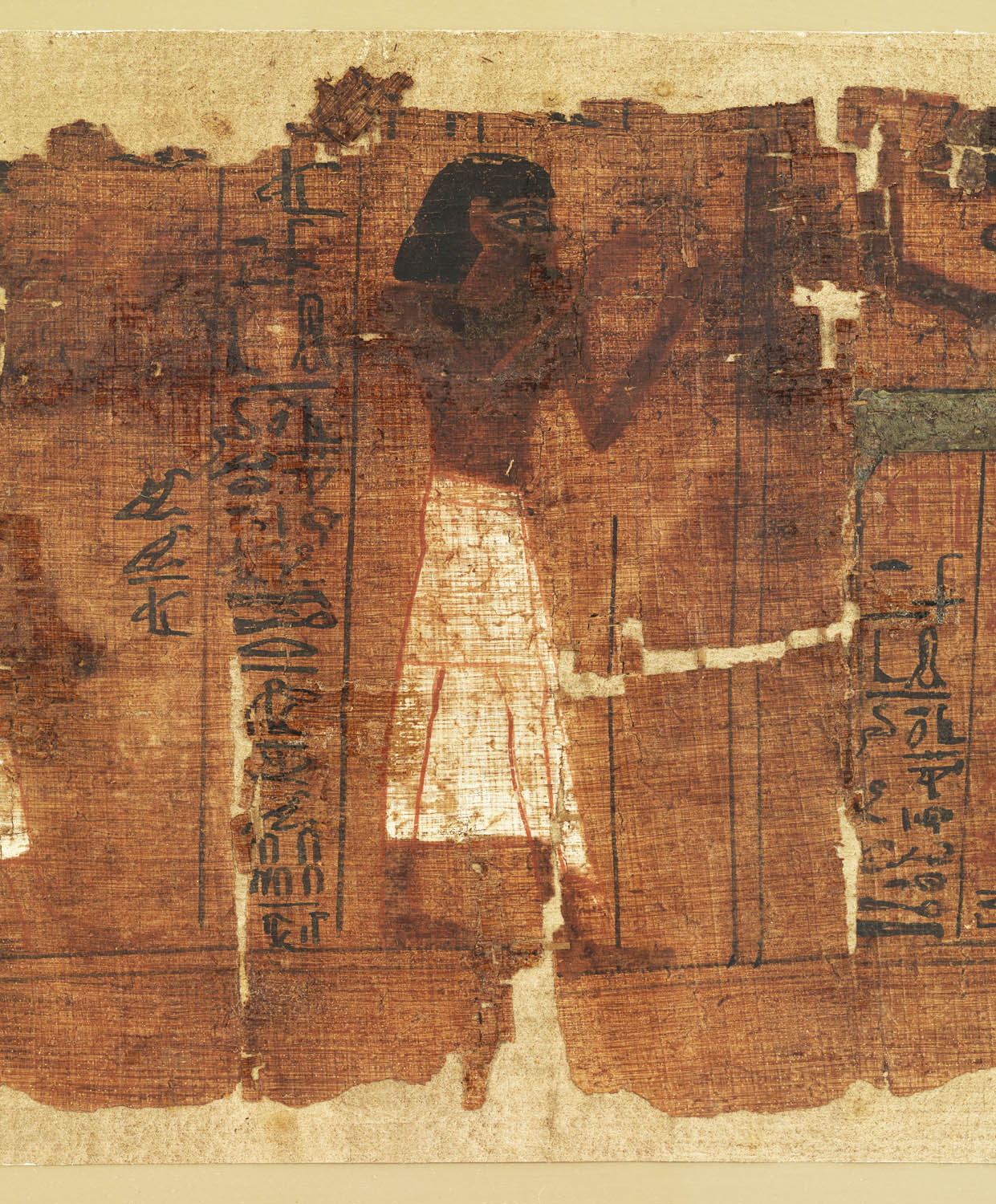
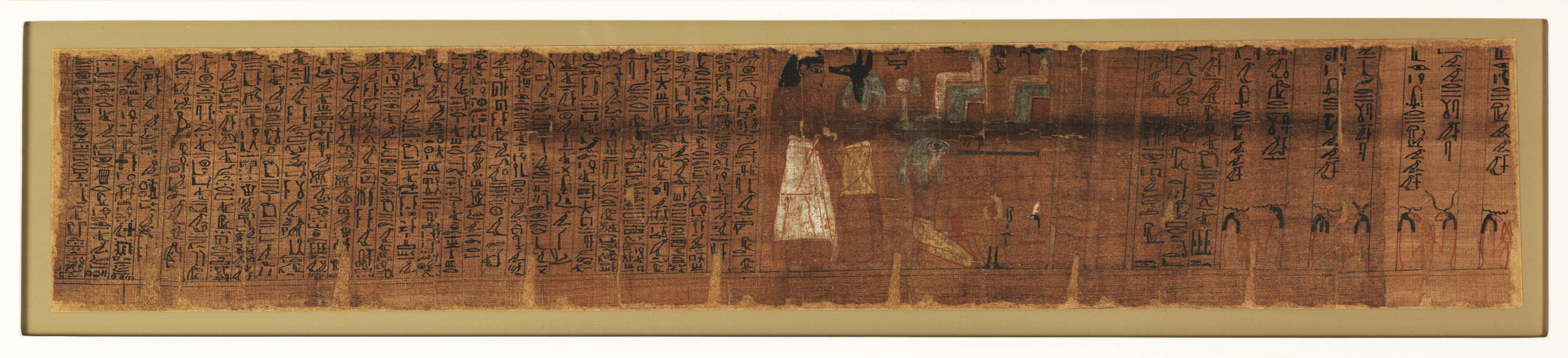
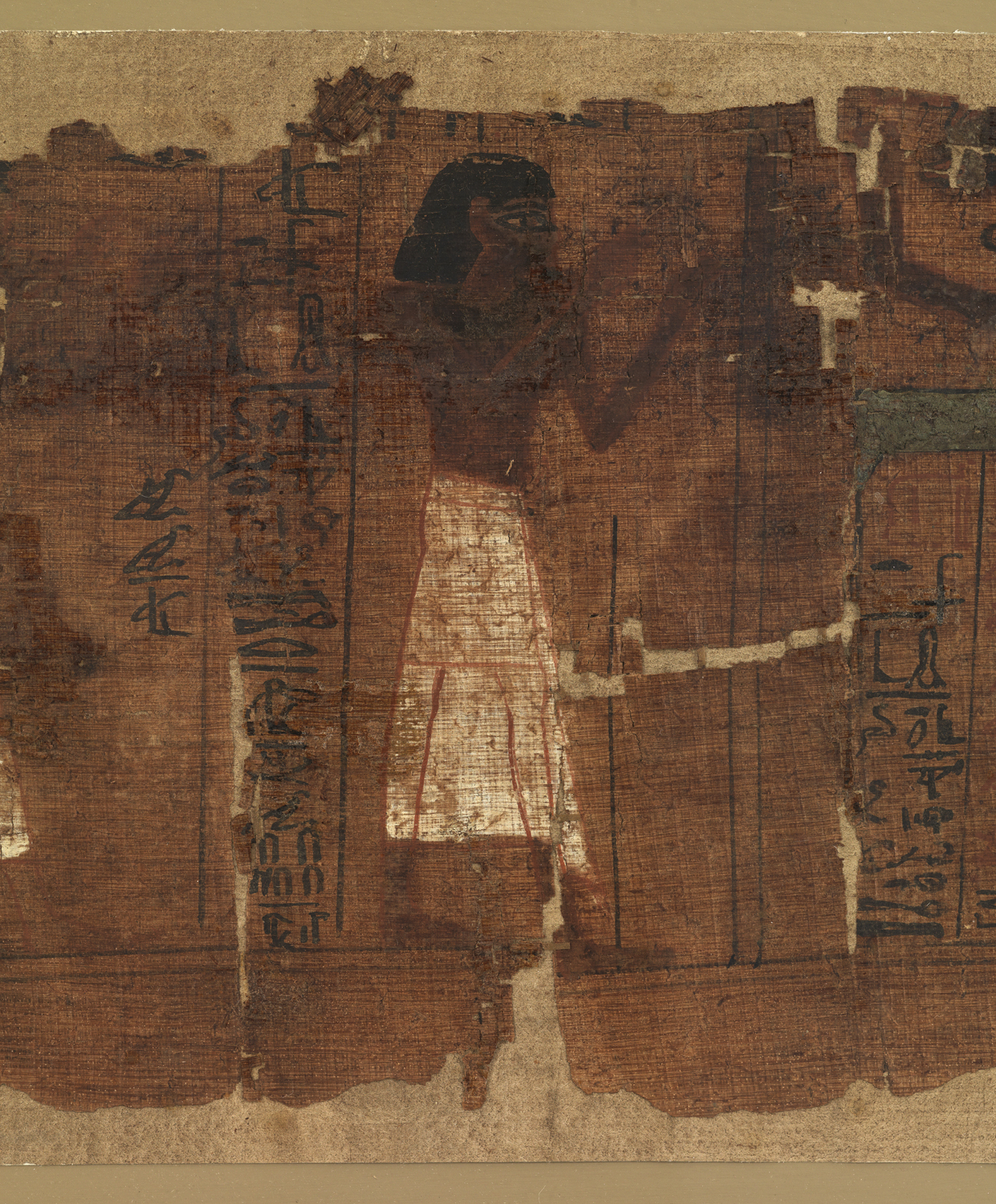
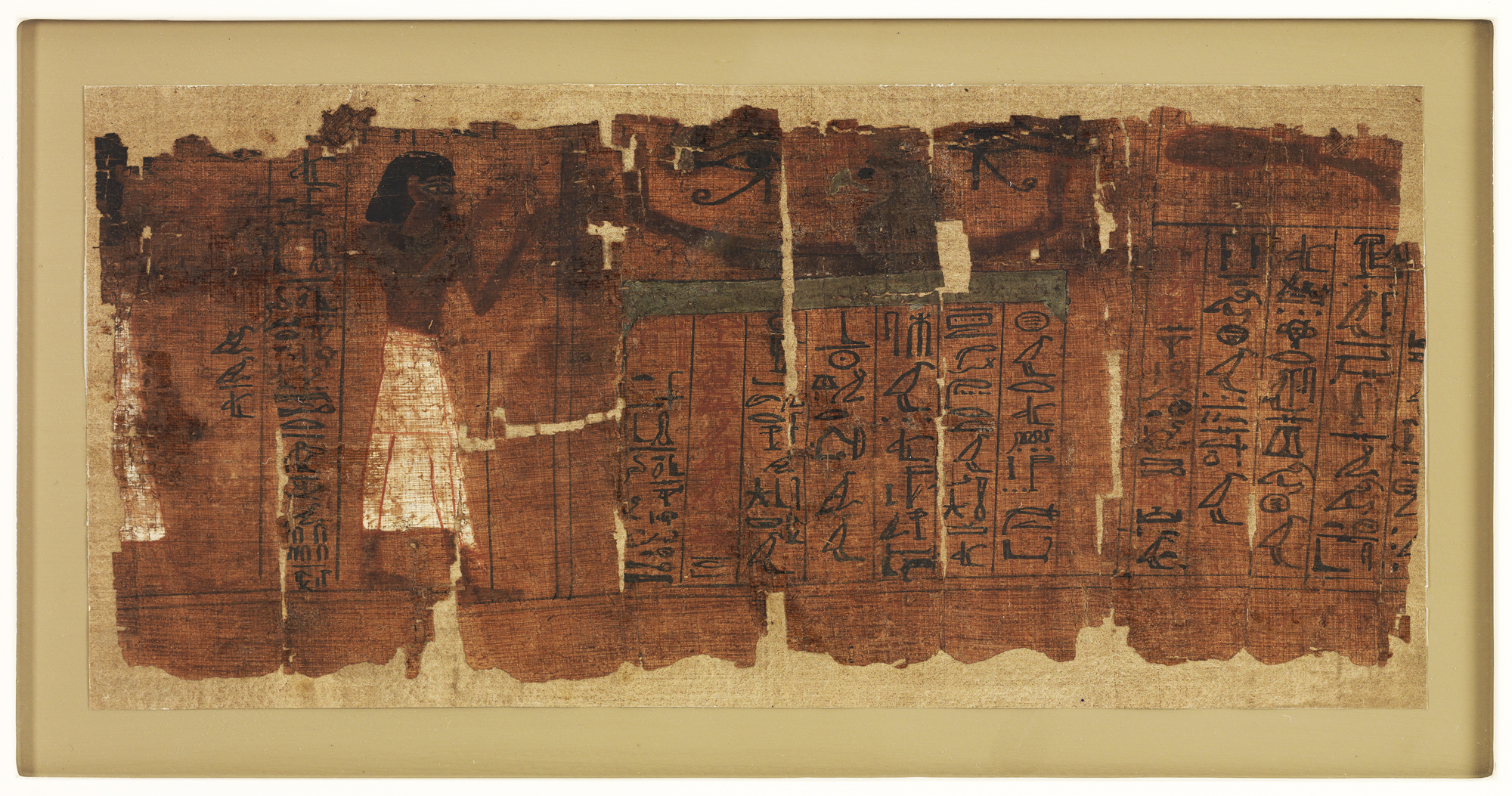
Featured here are two papyrus fragments from the Egyptian New Kingdom, 18th Dynasty (circa 1400 BCE) of an Egyptian Book of the Dead written for the Royal sandal-bearer of Isis, Min-Her-Khetiu:
The smaller papyrus sheet includes the painted figures of a woman and the dead man, their hands raised in adoration. Between them a column of hieroglyphs gives the name and title of the owner. Seven columns of hieroglyphs in the center contain the opening of Chapter 7 headed ‘Chapter of Sailing in the Bark of Ra’. Above this an accompanying vignette of a shallow boat containing the falcon headed Ra crowned with solar disc and flanked by wedjat eyes to signify health and security. To the right four columns recounting part of Chapter 149,’The Fourteen Mounds’, the illustration above showing a pottery jar with liquid spilling from it.
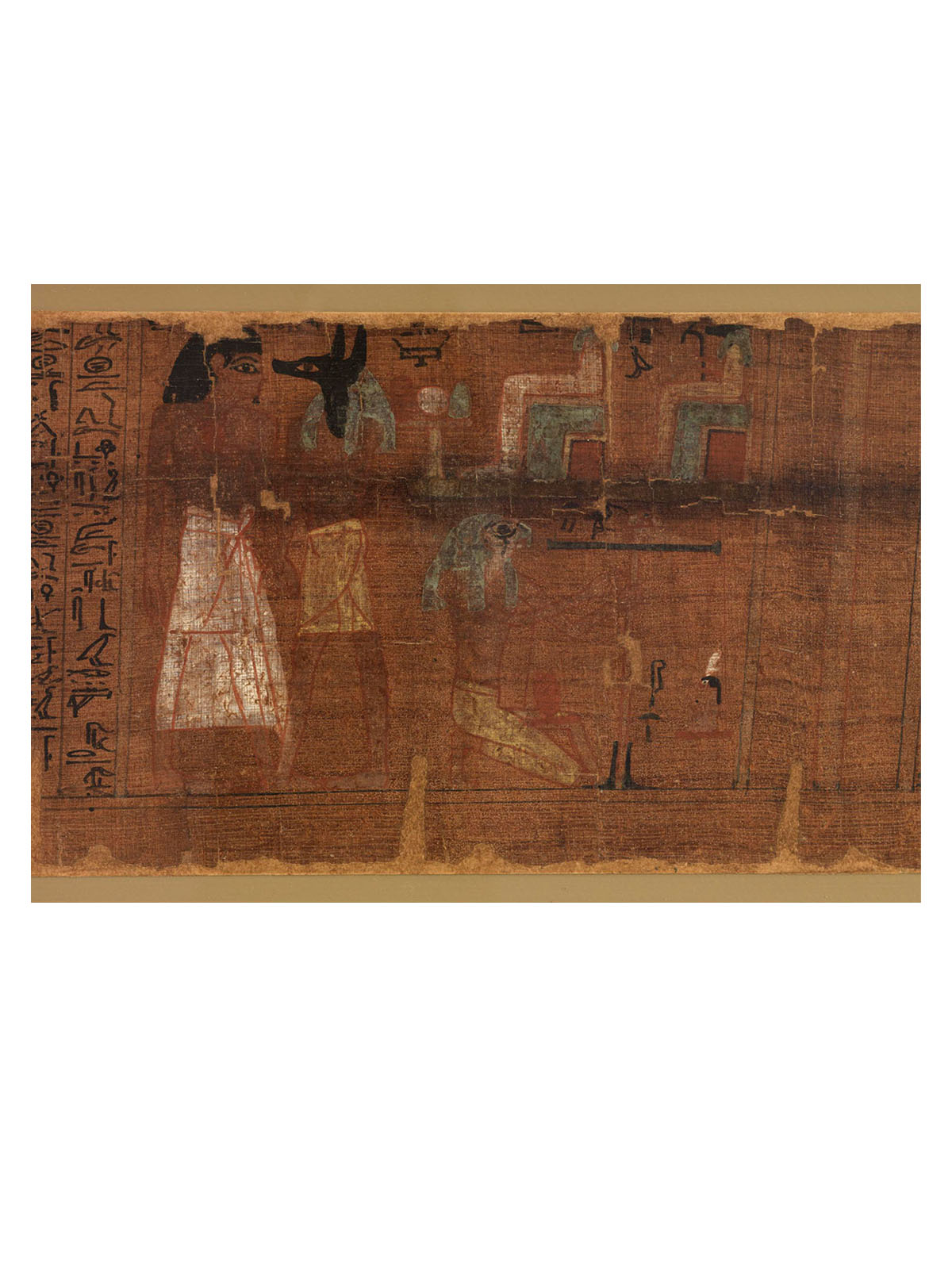
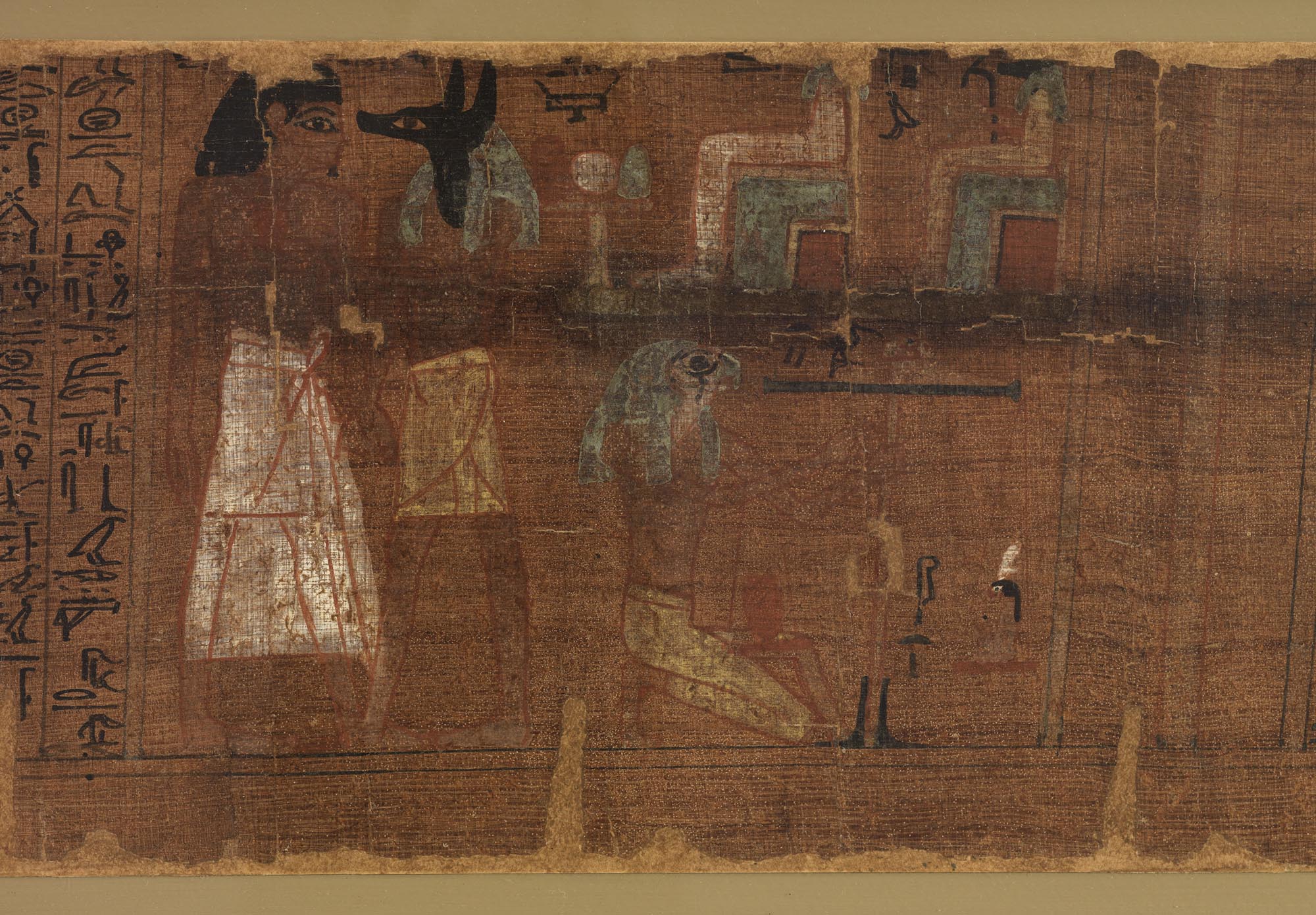
The longer sheet carries thirty columns of Chapter 125 ‘The Declaration of Innocence’ with a scene showing standing figures of Anubis with the dead man to the left of a kneeling falcon headed god (Horus though he is labelled Thoth) supervising the weighing of the heart against Maat. Two seated gods above the scales represent the 42 gods who witness the judgement. Two of the three columns in the center are from Chapter 81a ‘Spell for becoming a lotus’ and on the right side of the sheet are ten columns from the beginning of Chapter 144 ‘Address to the Keepers of the Underworld’ with the paired figures of the horned guardian and reporter of each gate shown at the foot of the column.
Other fragments from the same scroll can be found in the Cairo Museum and the Papyrus Museum, Syracuse, Italy. This piece is the oldest illuminated manuscript of the Egyptian Book of the Dead in private hands, and among the oldest literary manuscripts (MSS) on papyrus.
Provenance:
Previously Maurice Nahman, Cairo, acquired 1930s; The Schøyen Collection, Norway.
Exhibited:
Kon-Tiki Museet, Oslo, 2002-3
Published Literature:
Barbara Lüscher, ‘Der Totenbuch- Papyrus des Minherchetiu‘ in Studien zur Altägyptishen Kultur, Band 36, 2006.
FOOTNOTES:
1.) The British Museum
2.) Ancient.eu
REFERENCE
#SC_EG_1001
CIVILIZATION
New Kingdom. 18th Dynasty, c.1400 B.C.E.
SIZE
H. 14 x L. 33.2 cm and H. 15.5 x L. 88.8 cm
CONDITION
Fine condition
PRICE
Available Upon Request
PROVENANCE
Maurice Nahman, Cairo, acquired 1930s; The Schøyen Collection, Norway. Exhibited: Kon-Tiki Museet, Oslo, 2002-3 Literature: Published: Barbara Lüscher, ‘Der Totenbuch- Papyrus des Minherchetiu’ in Studien zur Altägyptishen Kultur, Band 36, 2006.
Frequently Asked Questions
The Egyptian Book of the Dead is a collection of magical spells used by ancient Egyptians to help guide the deceased through the hazardous journey to the afterlife. It was believed these spells were essential for reaching paradise safely and were often included in burial practices.
Before the New Kingdom period, the Book of the Dead was exclusively available to royalty and the elite. However, during the New Kingdom, its popularity grew among the general population due to the widespread belief in the Osiris myth, leading to its production as a commodity for sale.
Spell 125, known as 'The Declaration of Innocence,' is the one spell that appears in every copy of the Book of the Dead. It involves the judgment of the deceased's heart against the feather of Maat, overseen by gods such as Anubis and Horus, to determine the soul's purity and worthiness for the afterlife.
The papyrus fragments include painted figures of Min-Her-Khetiu and a woman in adoration, hieroglyphic texts from chapters such as 'Sailing in the Bark of Ra,' 'The Fourteen Mounds,' and 'The Declaration of Innocence.' They also feature illustrations of gods like Ra, Anubis, and Horus involved in the afterlife journey and judgment.
From the New Kingdom through the Ptolemaic Dynasty, the Book of the Dead varied in form and size, with people able to add or remove spells based on preference or affordability. Around 650 BCE, the text was standardized to 190 spells, though customization remained common.
Other fragments from the same scroll as Min-Her-Khetiu's Book of the Dead are housed in the Cairo Museum in Egypt and the Papyrus Museum in Syracuse, Italy, indicating the scroll was once more extensive and distributed across collections.
This papyrus is the oldest illuminated manuscript of the Egyptian Book of the Dead in private hands and one of the oldest literary manuscripts on papyrus. It provides valuable insight into ancient Egyptian funerary practices and religious beliefs during the 18th Dynasty of the New Kingdom.