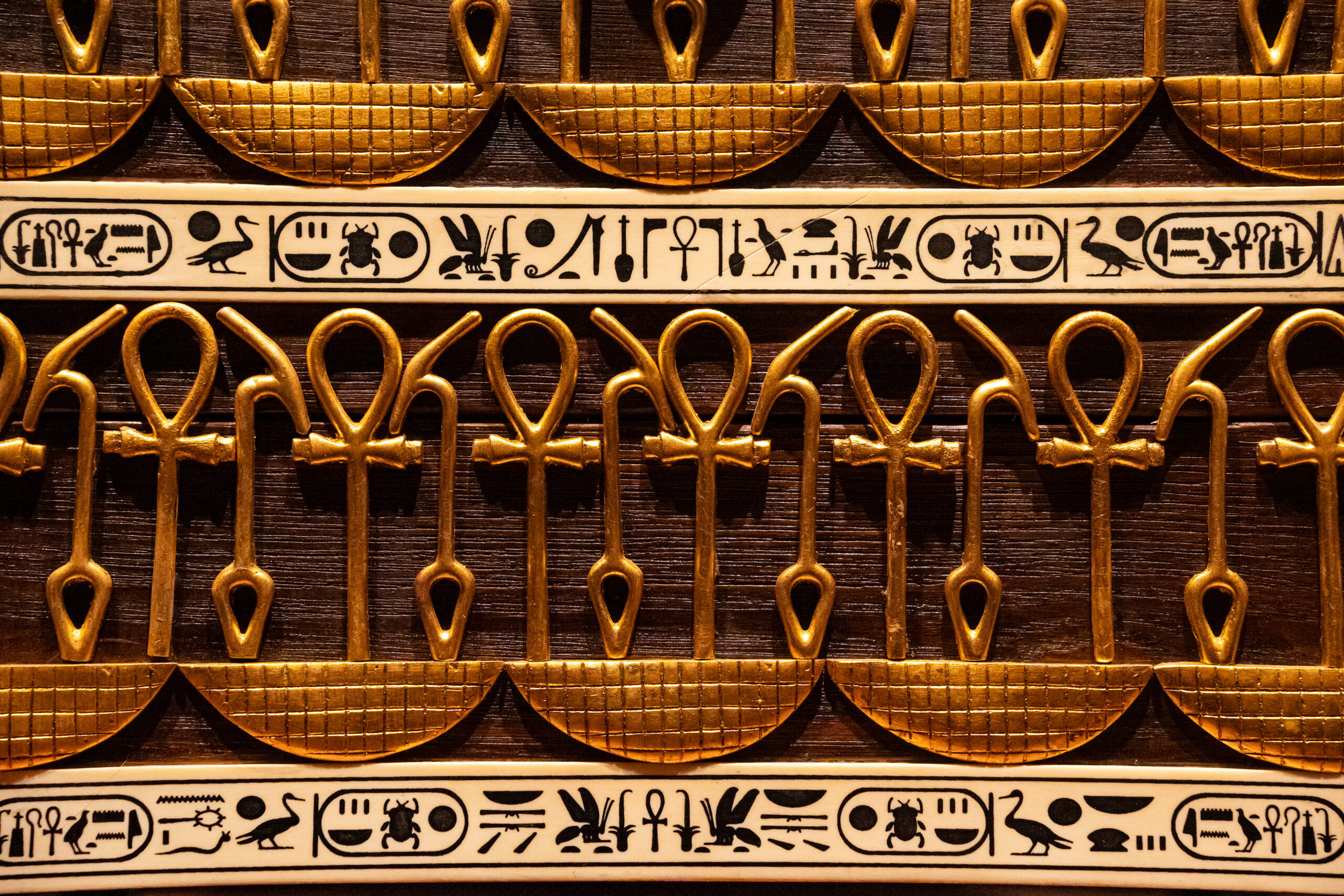
Empowered by specific technologies, exclusive access to precious metals and gems, and a culture that valued royalty and luxury, Ancient Egypt remains a leading force in jewelry influence and manufacturing, that will live on forever.
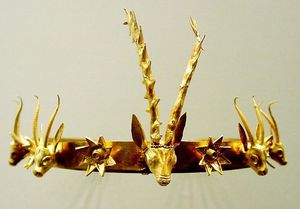
Egypt’s defining moment in jewelry production was their discovery of gold that was available to them from ancient riverbeds. This enabled Egyptians to collect vast quantities of gold, which they quickly learned was the perfect material for creation of elaborate jewelry. As you could probably imagine, gold became a status symbol – a symbol of luxury, power and religion. Egyptian jewelry quickly became a highly valued trade item in the ancient world. Pieces of Egyptian workmanship can be found in many places around the world, from ancient Persia, Turkey to Greece and Rome.
Egyptian jewelry included necklaces, bracelets, belts, pendants, hair beads and many other jewelry types that were decorated with the designs of scarab beetles, scrolls, winged birds, tigers, jackals and antelopes.
Egyptian did not just wear these elaborate jewels during life, but they also wore it after death, left by their side during extensive burial ceremonies. This tradition of securing jewelry in hard to reach places enabled modern archeologist to discover vast quantities of perfectly preserved Egyptian wealth – thus allowing us to share this knowledge with you.
Information from History of Jewelry
Frequently Asked Questions
Ancient Egyptian jewelry was primarily made from gold, which was abundantly available from ancient riverbeds. Gold was favored for its durability, beauty, and symbolic association with luxury, power, and religion. Additionally, precious metals and gems were also used to create elaborate and meaningful pieces.
Gold was significant in ancient Egyptian jewelry because it symbolized luxury, power, and religious beliefs. Its availability from riverbeds allowed Egyptians to produce vast quantities of gold jewelry, which became a status symbol and a highly valued trade item in the ancient world.
Ancient Egyptians wore a variety of jewelry types including necklaces, bracelets, belts, pendants, and hair beads. These pieces were often decorated with symbolic designs such as scarab beetles, scrolls, winged birds, tigers, jackals, and antelopes, reflecting their cultural and religious significance.
Jewelry played an important role in ancient Egyptian burial ceremonies. Egyptians were buried with elaborate jewelry left by their side, which was believed to provide protection and status in the afterlife. This practice has helped modern archaeologists discover well-preserved artifacts that offer insight into ancient Egyptian wealth and craftsmanship.
Ancient Egyptian jewelry design was influenced by a culture that valued royalty, luxury, and religious symbolism. The use of specific motifs like scarabs, winged birds, and animals reflected their beliefs and social hierarchy, making jewelry not only decorative but also meaningful and symbolic.
The influence of ancient Egyptian jewelry extended far beyond Egypt, reaching ancient Persia, Turkey, Greece, and Rome. Egyptian workmanship was highly valued and traded widely, demonstrating the global impact of their jewelry craftsmanship and design.