
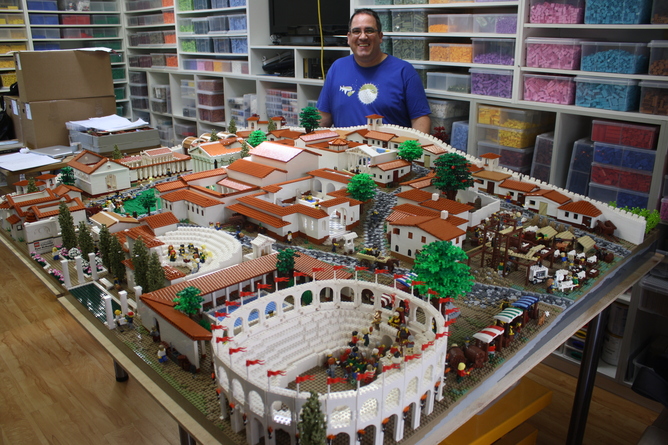
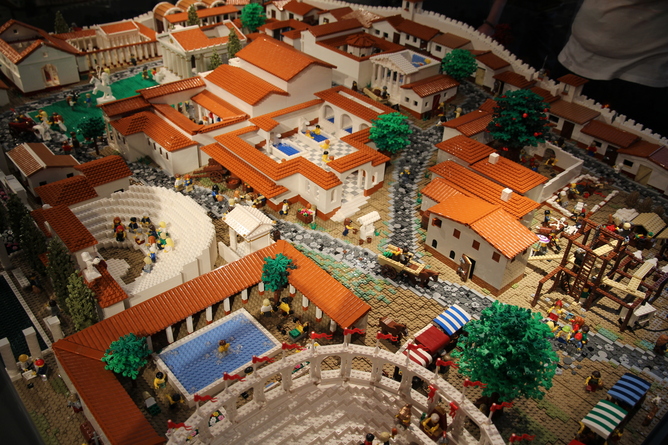
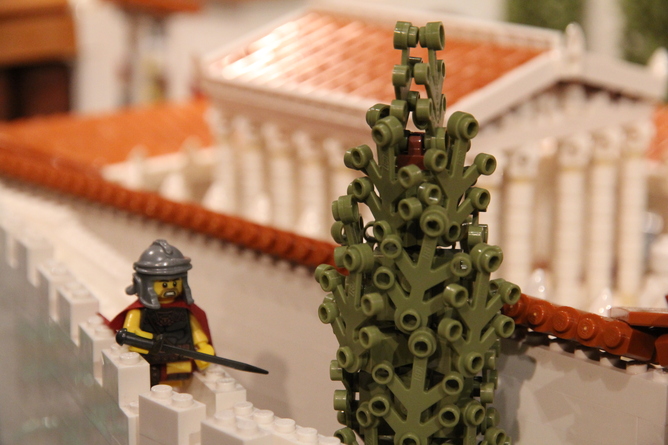
The ancient Roman city of Pompeii was recently recreated at Sydney University’s Nicholson Museum… using 190,000 lego blocks! It is the largest model of the ancient city ever constructed out of Lego blocks. Within the model’s makeup, There is a mix of ancient and modern elements, displaying Pompeii as it was in 79AD, as it was in the 1700s, and as it is today.
The Nicholson Museum, with collections of artifacts from the Mediterranean region, Egypt and the Middle East, is a place where visitors can expect to see Greek vases, Egyptian sculpture and ceramic sherds from Jericho. In the last few years, the museum has commissioned professional Lego builder Ryan “The Brickman” McNaught to recreate three ancient sites, all made from Lego. The joy of the model was its ability to contrast the old with the new. Half the model featured the amphitheatre in antiquity; the other half featured the building in ruins with Lego modern tourists.
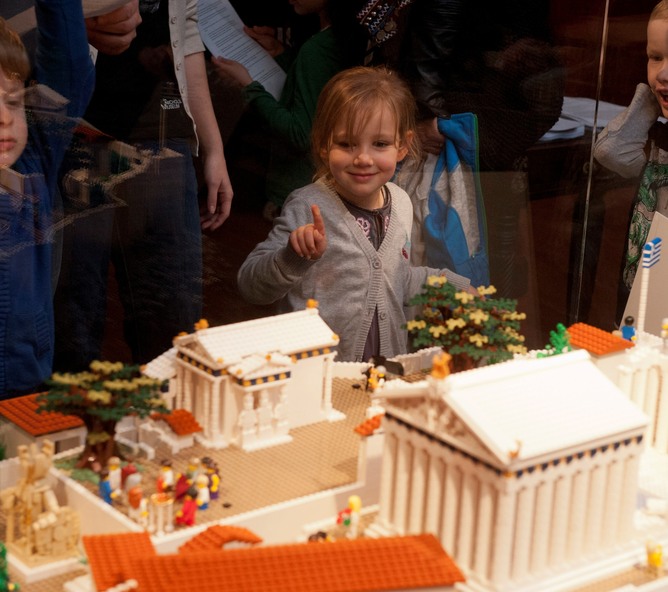
The purpose of this was to attract a new audience to the museum space and to demonstrate the importance of fun in a museum context. I think it is safe to say, this experiment was successful.
Frequently Asked Questions
The Lego Pompeii model is a large-scale recreation of the ancient Roman city of Pompeii, constructed using 190,000 Lego blocks. It is the largest Lego model of Pompeii ever made and showcases the city as it appeared in 79 AD, the 1700s, and today, blending ancient and modern elements.
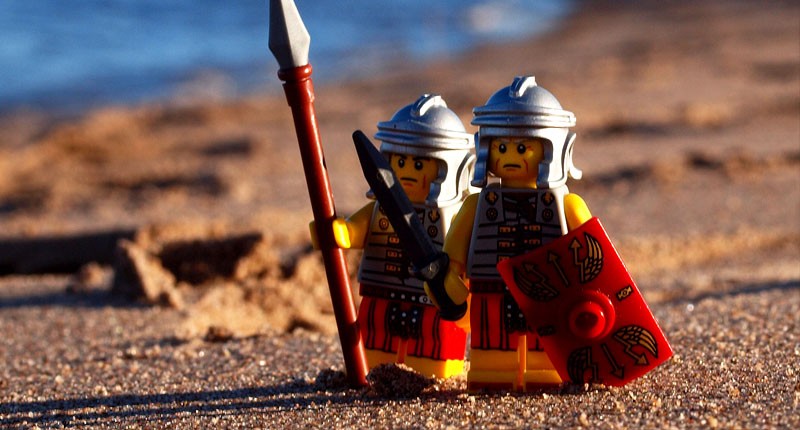
Professional Lego builder Ryan “The Brickman” McNaught was commissioned by the Nicholson Museum to create the Lego Pompeii model as well as two other ancient site models. His work combines historical accuracy with creative Lego construction to engage museum visitors.
The model contrasts Pompeii’s ancient past with its present state by depicting half the amphitheatre as it was in antiquity and the other half in ruins with modern Lego tourists. This juxtaposition highlights the passage of time and invites viewers to reflect on history and preservation.
The museum aimed to attract a new audience and demonstrate the importance of fun in a museum context. Using Lego models made the exhibits more engaging and accessible, successfully drawing interest from visitors who might not typically visit a traditional museum.
The Nicholson Museum houses collections of artifacts from the Mediterranean region, Egypt, and the Middle East. Visitors can expect to see Greek vases, Egyptian sculptures, and ceramic sherds from Jericho, among other historical items.
The project was very successful in attracting new visitors and demonstrating that incorporating playful elements like Lego models can enhance the museum experience. It effectively combined education with entertainment, making history accessible and enjoyable.