Description
Silenus Greek god of Drunkenness and Wine-Making
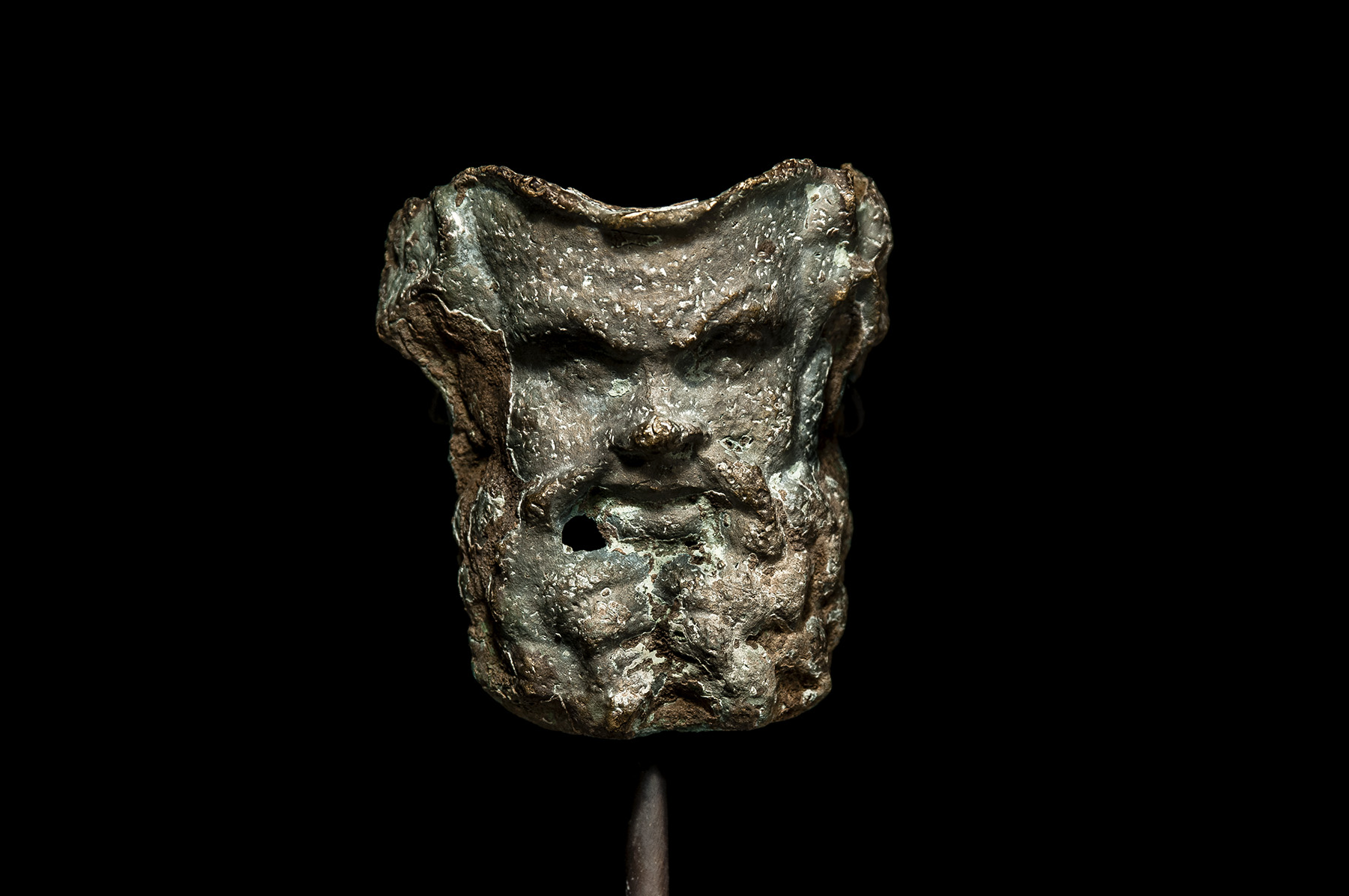
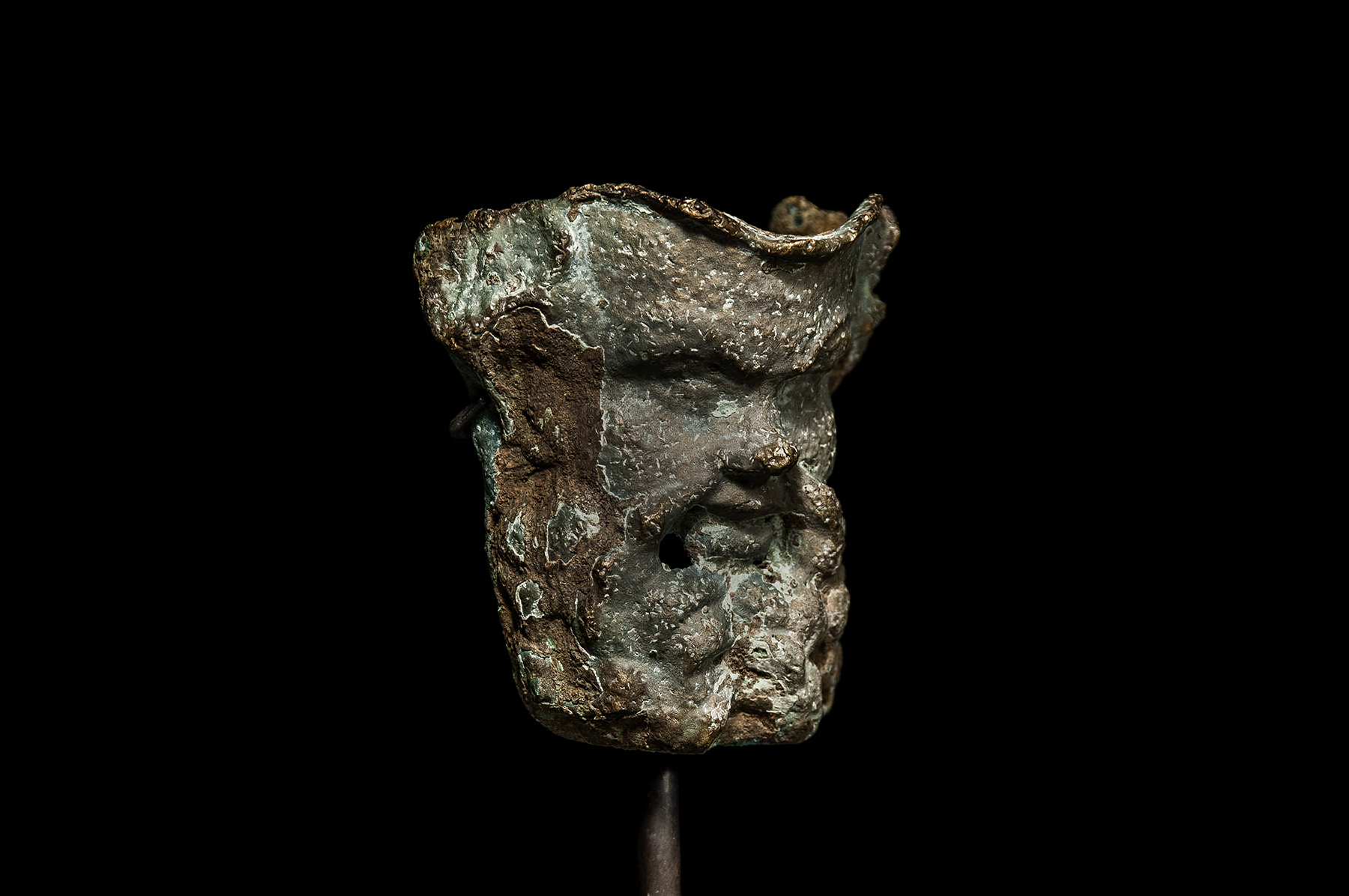
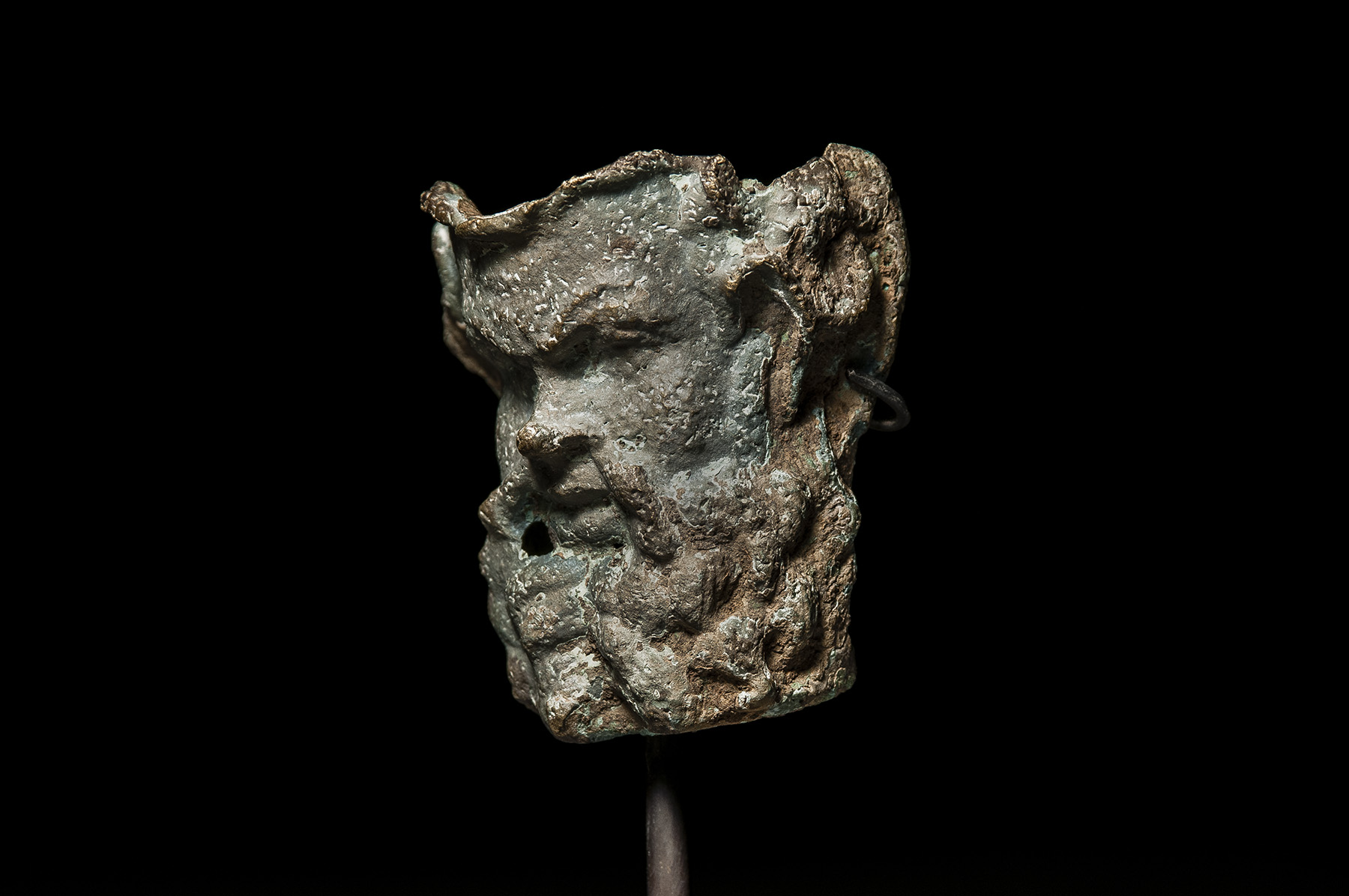
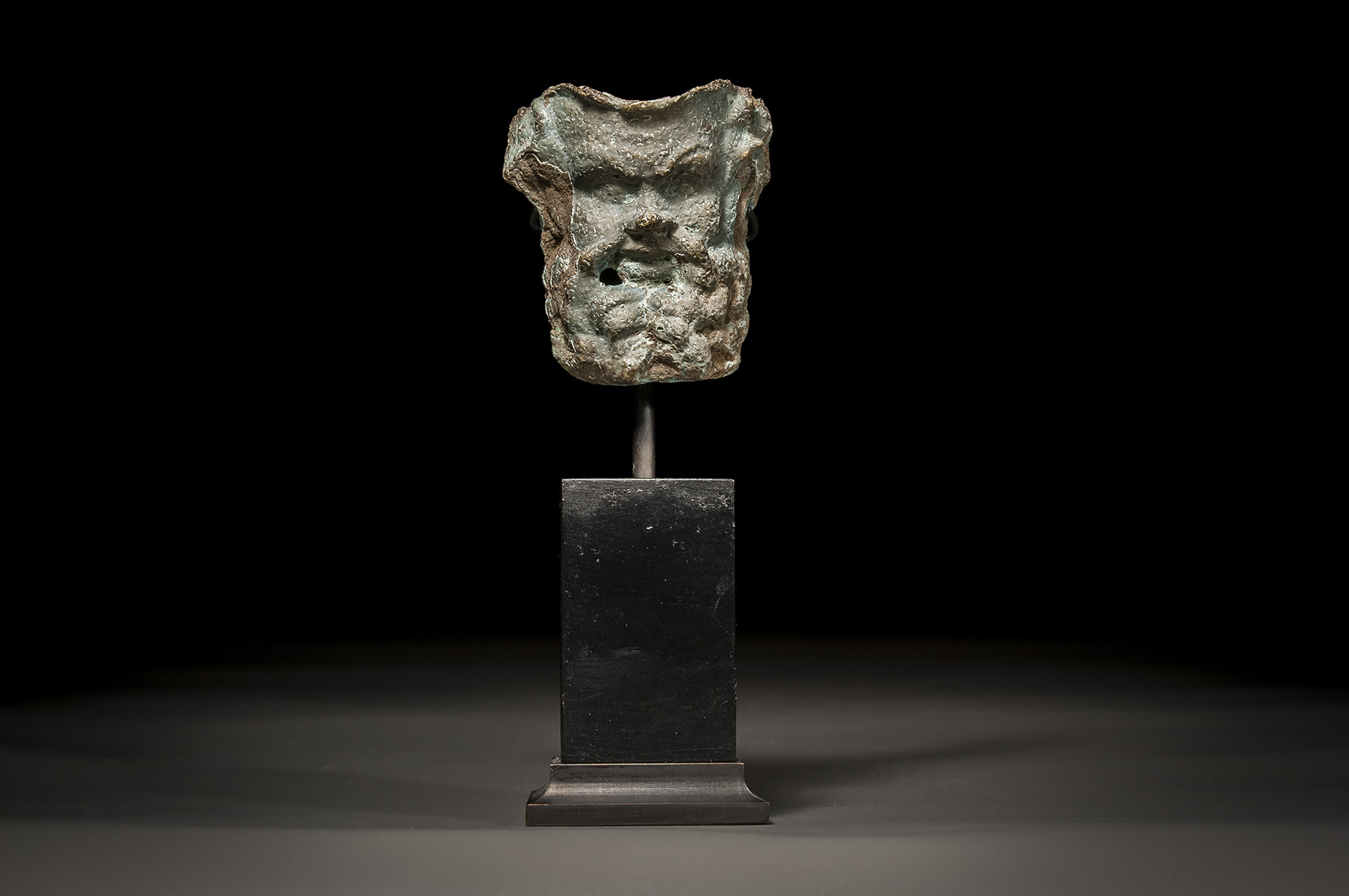
This bronze depiction of Silenus, Greek god of drunkenness and wine-press, dates to the Hellenistic period 300 B.C.E. – 200 B.C.E. He was companion of the wine god Dionysus, and from the 5th century B.C.E. the name Silenus was applied to Dionysus’ foster father, which thus aided the gradual absorption of the Satyrs and Sileni into the Dionysiac cult.
Here Silenus is depicted as an old satyr with a long mustache and a square beard with big curling hair locks. The face has strong features with chubby cheeks, snub-nose, fleshy lips, frowning brows, as well as pointed ears with ivy leaves set over both of them. The face is finely modeled with a strong and living expression. It is framed with a contour line at the border of the missing upper and back parts of the head.
Such a facial depiction was applied on a statue which was possibly made of other material. The punched surface of the face may indicate that it was plated or sheathed with silver or gold.
Classical Depictions of Silenus
A notorious consumer of wine, Silenus was usually drunk and had to be supported by satyrs or carried by a donkey. When intoxicated Silenus was said to possess special knowledge and the power of prophecy: It was believed that he acquired arcane knowledge and was able to predict the future. Seilenos was, in essence, the spirit of the treading dance of the wine-press – his name being derived from the words seiô, “to move to and fro,” and lênos, “the wine-trough.”
Reference:
For the style:
cf. Smith, R.R.R., Hellenistic Sculpture, Thames and Hudson, London 1991, fig. 299; Stewart, A., Greek Sculpture. An Exploration, II ( plates ), Yale University Press, New Haven & London, 1990, figs. 684, 708.
For a similar Etruscan Satyr:
cf. Mitten, D. G., and Doeringer, S. F., editors, Master Bronzes from the Classical World, Exh. cat., Fogg Art Museum, Cambridge, Mass., 1967, p.222, fig. 225.
For Silenus’ head:
cf. Ibid, p. 125, fig. 125.
Sources:
1.) Britannica – Satyr
2.) Wikipedia – Silenus
3.) Theoi – Seilenos
4.) Greek Mythology – Silenus
REFERENCE #
SI_GR_1016
CIVILIZATION
Hellenistic, 300 B.C.E. – 200 B.C.E.
SIZE
H. 6.5 cm
CONDITION
Two holes below the mouth. Surface with light punch marks
PRICE
$8,500 USD
PROVENANCE
The Baidun Collection
Frequently Asked Questions
Silenus was the Greek god of drunkenness and wine-making, often depicted as an old satyr and companion to the wine god Dionysus. He was known for his constant intoxication and was believed to possess special knowledge and prophetic powers when drunk.
In Hellenistic art, Silenus is typically shown as an old satyr with distinctive facial features such as a long mustache, square beard, and ivy leaves on his pointed ears. This bronze depiction from 300-200 B.C.E. reflects the artistic style of the period and may have originally been plated with precious metals like silver or gold.
Silenus was a companion and foster father figure to Dionysus, the god of wine. From the 5th century B.C.E., Silenus' identity merged with Dionysus' foster father, facilitating the integration of Satyrs and Sileni into the Dionysiac cult, which celebrated wine and revelry.
Despite his drunkenness, Silenus was believed to have acquired arcane knowledge and the ability to predict the future. His intoxicated state was thought to grant him prophetic powers, making him a figure of wisdom within the Dionysian myths.
The name 'Silenus' derives from the Greek words 'seiô' meaning 'to move to and fro' and 'lênos' meaning 'wine-trough.' This reflects his role as the spirit of the treading dance of the wine-press, symbolizing the process of wine-making and its associated rituals.
Classically, Silenus is depicted as an old satyr with a long mustache, square beard, chubby cheeks, snub nose, fleshy lips, frowning brows, and pointed ears adorned with ivy leaves. He is often shown supported by satyrs or carried by a donkey due to his drunkenness.
The bronze statue of Silenus dates to the Hellenistic period, approximately 300-200 B.C.E. It is part of the Baidun Collection and measures 6.5 cm in height. The statue shows signs of wear such as two holes below the mouth and light punch marks on the surface.