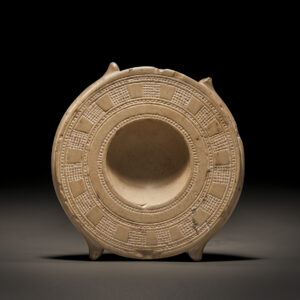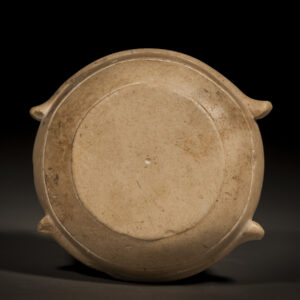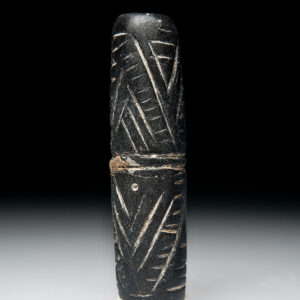
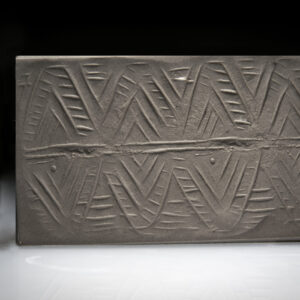
A Pre-Dynastic Andesite Cylinder
Description
REFERENCE #
SG_MS_1035
CIVILIZATION
Mesopotamian, PRE-DYNASTIC 3000 B.C.E. – 2700 B.C.E.
SIZE
L. 4.5 cm
CONDITION
Excellent condition
PRICE
$
PROVENANCE
The Baidun Collection

Showing all 8 results
Mesopotamian, PRE-DYNASTIC 3000 B.C.E. – 2700 B.C.E.
L. 4.5 cm
Excellent condition
$
The Baidun Collection
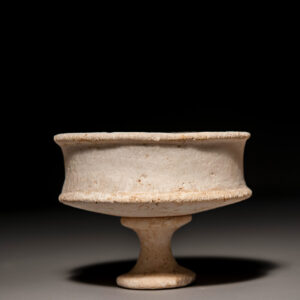
A Tazza refers to a little cup, consisting of a short stem topped by a wide receptacle. This piece comes from the Samarian region, created in the style of either Egyptian or Canaanite craftsmen. The small cup is only 6 cm in size, lending an intimacy to the object during religious ceremonies.
The cup’s body is pinched at its mouth as well as its base, which arcs downward and connects to the wide hourglass shaped stem.
KB_ST_9999
Late Bronze Age, 1500 B.C.E. -1200 B.C.E.
D. 6 cm
Part of the base is missing in antiquity
Price available upon request
Dionysus, the god of wine, is portrayed frontal, looking forward. His hair is tied with a thick fillet with two rows of locks across his forehead. He has a long moustache and a square beard composed of curving locks. The face with arched eyebrows, large eyes sockets, pronounced cheeks, straight nose and a smiling mouth with fleshy lips. The Archaistic head is inspired by the Greek Archaic style, frontal and frozen, with stylized features and smiling mouth. It has a strong and majestic expression.
Reference: Cf. Anderson M. L., Nista L. (Eds.), Radiance in Stone. Sculptures in Colored Marble from the Museo Nazionale Romano, De Luca Edizioni d’Arte, Rome, 1989, p.72, fig. 9.
SI_RM_1081
Roman, 100 C.E. – 200 C.E.
H. 10.2 cm
Missing inlayed eyes and lower part of beard, chipped at the back of the upper part.
Price available upon request
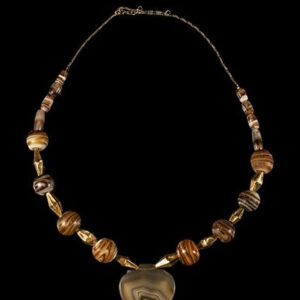
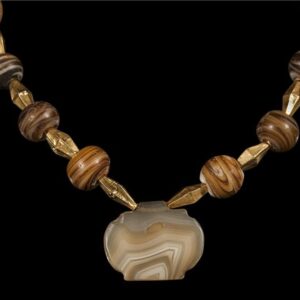
A very beautiful Byzantine banded multi shaped Agate beads necklace with 22K gold leaf covered diamond shaped inserts
JW_RM_1018
Byzantine Period, 600 C.E. – 700 C.E.
L. 47 cm
Excellent condition
$2500
The Baidun Collection
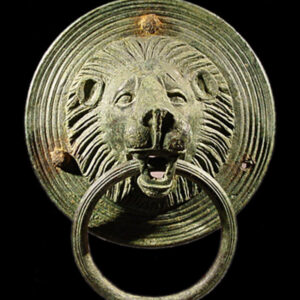
Here we see a bronze handle with a lion’s head holding the bronze ring from its mouth. This handle was cast sometime between 100 C.E. – 300 C.E. and depicts the lion in a highly realistic manner with much care given to the proportion of its protruding snout, fierce teeth, and vibrant mane. The heads of two iron nails remain from where the handle was hammered onto the surface from which it rested against. A series of concentric circles frame the lion’s head with beautiful precision, while the handle’s ring is fully intact and symmetrical.
This piece is in excellent condition and has a diameter of approximately 13 cm. The bronze has been cleaned and cared for, and all of its original details remain as fresh as the day they were cast. The lion has long been a symbol of strength and pride, and this piece continues to resonate across two thousand years of history.
SI_RM_1063
Roman, 100 C.E. – 300 C.E.
D. 13.7 cm
Fine condition
$18,000
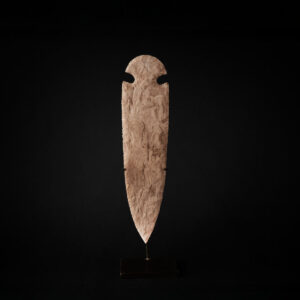
This exceptional Neolithic flint dagger exemplifies the sophisticated stone tool craftsmanship of early Egypt or the broader Levantine region, dating from approximately 6000 to 3150 BCE. The elongated, pointed form showcases skillful knapping and pressure flaking techniques, with a smooth surface and subtle signs of use wear, indicating its original function as a utilitarian weapon or ceremonial object. Made from high-quality flint, its natural color ranges from light beige to pale brown, with a finely worked edge that demonstrates the precision and artistry of Neolithic artisans. This piece retains excellent preservation and exhibits the characteristic features of early prehistoric tools—both functional and symbolic. Its history and craftsmanship make it a noteworthy acquisition for collectors, museums, or institutions seeking authentic artifacts from one of the most significant periods in human history. An opportunity to acquire a unique and visually striking example of ancient stone technology with profound cultural and archaeological significance.
ST-CL-1003
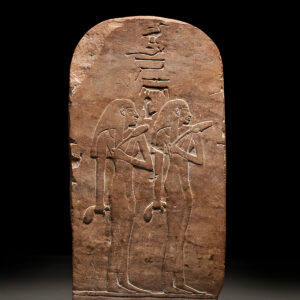
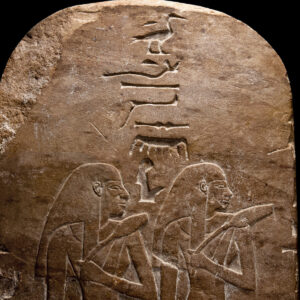
Egyptian, 4000 B.C.E.
H 25 cm
fine condition.
$8500