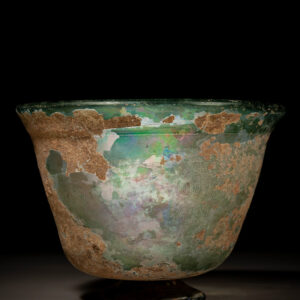
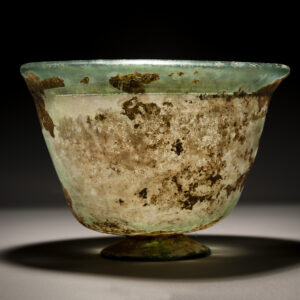
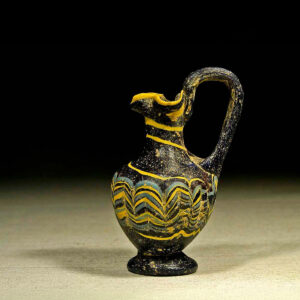
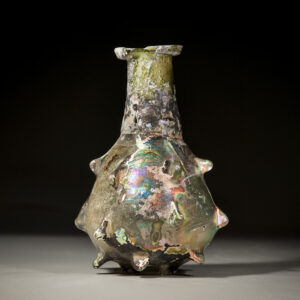
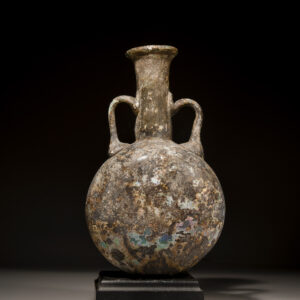
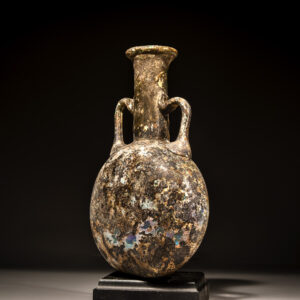
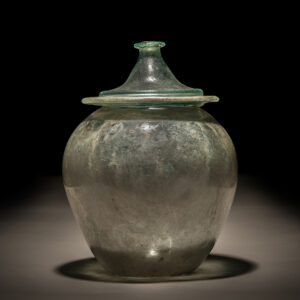
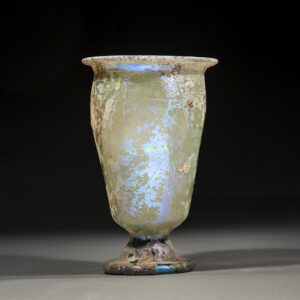
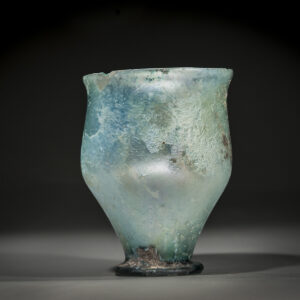
This large glass bowl comes from Samaria, the capital of ancient Israel in the 9th century B.C.E. and 8th century B.C.E.. Located just west of the Jordan River, Samaria was a vibrant city for many centuries; its history is recounted in the Old Testament book of Kings. It experienced many invasions over the intervening centuries located as it was in the strategic mountains of Judea.
By the time this beautiful aquamarine bowl was blown, Samaria had come under Roman rule, a period of great innovation as new Roman technology filtered throughout the region.
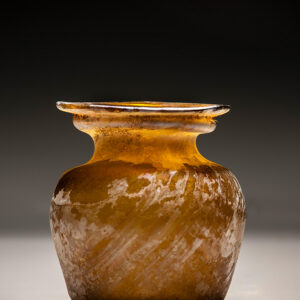
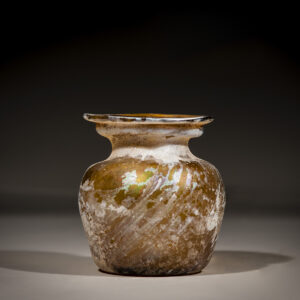
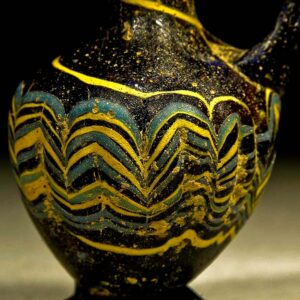
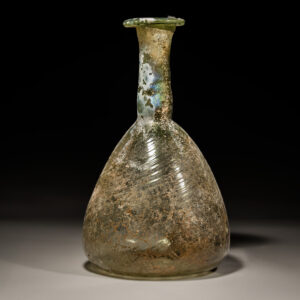
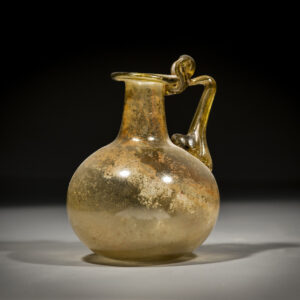
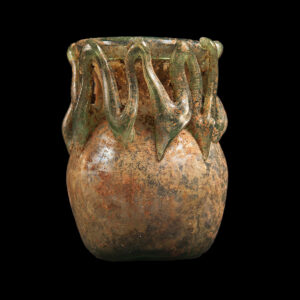
The craftsmen of Ancient Rome were constantly innovating to perfect their methods, while reaching new heights of early artistry. The swooping ribbons on the body of the amber glass jar may seem like a simple stylized effect, yet it represent the fine work of a dedicated glassblower using the most rudimentary of tools to create a truly unique piece of filled with ancient beauty.
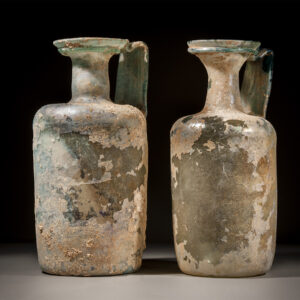
Only 7 cm in height, this squat jar would have held the perfumes or ointments used daily to embellish the scent or cheeks of an ancient Roman citizen.
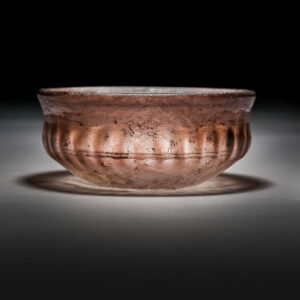
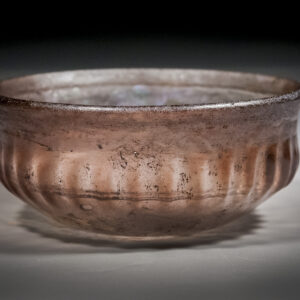
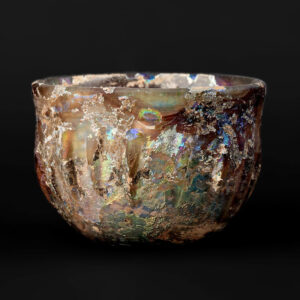
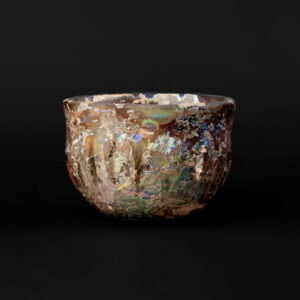
This elegant ribbed glass bowl exemplifies the artistry and technical skill of early Roman glassmakers. Crafted from a rare aubergine-hued soda‑lime glass, the bowl presents a gently flared rim and a rounded, harmonious profile with a lustrous, weathered surface that reveals a rich, multicolored iridescence developed through centuries of natural burial conditions. Measuring approximately [dimensions available on request], it is a compact yet striking domestic vessel.
The most striking feature of the bowl is its pronounced vertical ribbing, which encircles the body and lends a rhythmic, tactile quality to the form. Two finely incised concentric lines around the midsection provide an elegant counterpoint to the ribs, demonstrating careful finishing by hand. The surface iridescence, a product of long-term chemical interaction rather than modern treatment, enhances the deep aubergine tone and accentuates the delicate interplay of light across the exterior.
The workmanship shows mastery of early glass techniques—likely mold‑forming for the ribbed body with subsequent hand incision—resulting in crisp, well-executed details and a smoothly rendered rim. The uncommon deep purple color and strong iridescent sheen mark this piece as a particularly refined example of provincial Roman glass production.
Likely used for both every day and display purposes, this bowl would have served as a functional domestic vessel and possibly as a valued item within a household’s tableware. Its durable glass, sophisticated surface effects, and rare coloration reflect both the aesthetic sensibilities and material culture of the early Imperial period. Found in Sabaste; early Roman, ca. 1st century AD.REFERENCE #
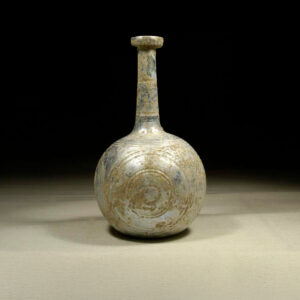
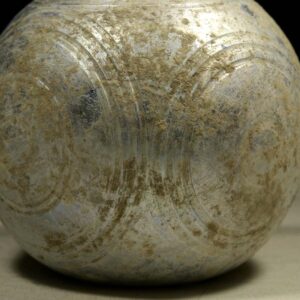
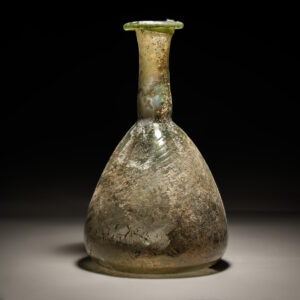
A beautiful and graceful long necked glass flask, decorated with four concentric circles around the body. And more circles at the bottom of the neck and along it. It is a very heavy piece because of its thick walls. The circles were done by etching the glass with a stone tool.