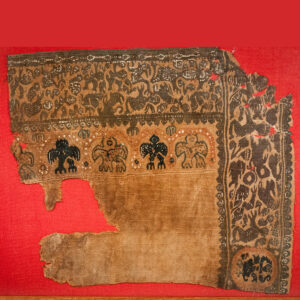
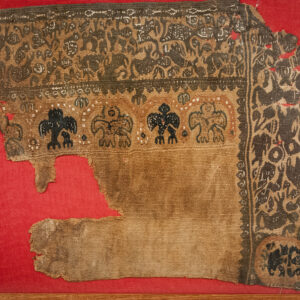
A Frieze Corner with Various Figures and Floral Patterns

Description

CORNER FRAGMENT – A frieze corner with framed, dark ornamental band on a light ground, densely filled with various floral patterns, kneeling human figures, fish and mythical creatures, plus filler motifs. At one end of the frieze, a small tondo with a dancing (?) human figure. Foliage-filled border at three frieze edges. Along one side inside the border another frieze of four and a half winged figures on talons.

Mounted on red linen ground and framed. Fragments of tunics, tabulae, etc. – Cf. Cat. Leipzig – 2002, 113 ff. nos. 157–173 with ill.

REFERENCE #

TX_EG_1006

CIVILIZATION

Egypt,

Coptic, 300 C.E. – 500 C.E.

SIZE

L. 26 cm, W. 22.5 cm

CONDITION

Fine Condition

PRICE

$1,500

PROVENANCE

Formerly Coll. Eduard Schällibaum, 1950’s–60’s, Chur. – On back of frames, alleged find spot “Upper Egypt”, inv. no. “716. 269. 476”.
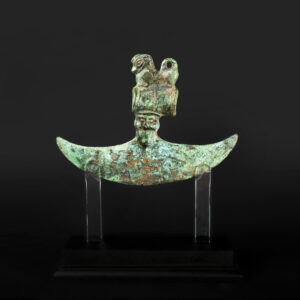
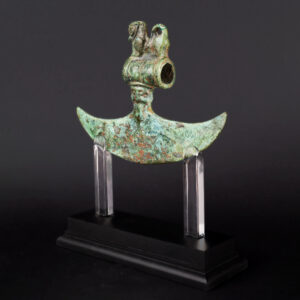
Bronze Persian Axe Head

This remarkable ancient Elamite crescent axe features a distinctively curved, finely detailed blade that appears to emerge from the mouth of a bearded man, creating a powerful and evocative visual narrative. The figure of the bearded man, likely representing a deity or a legendary figure, is elegantly cast or carved, with a well-defined facial expression and beard, symbolizing strength or authority. The blade itself, attached seamlessly to the mouth, displays polished surfaces and sharp edges, indicative of high-quality craftsmanship from the Achaemenid periods. The axe’s shaft extends from the figure and is adorned with an intricate relief of a horse, symbolizing power, nobility, or martial prowess. The combination of the mythic figure, the dynamic crescent blade, and the equine motif reflects the sophisticated iconography and artistry characteristic of ancient Persia’s ceremonial weaponry. Crafted from bronze, this artifact exemplifies the masterful metallurgical techniques and symbolic artistry of the period.

REFERENCE #

WP_PR_1116

CIVILIZATION

Iron Age, 1200 B.C.E. – 900 B.C.E.

SIZE

L. 18 cm

CONDITION

Excellent condition, with dark green patina.

PRICE

$6998

PROVENANCE

The Private Collection of K. Baidun

Bronze wine Philae bowl

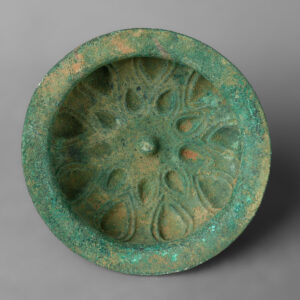
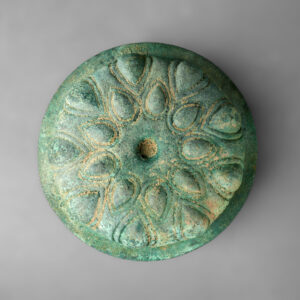
Bronze wine Phiale bowl from the Achaemenid period, circa 500 BC, dating to the time of Ezra and Nehemiah. This elegant vessel is crafted from bronze and measures approximately 16 cm in diameter. It features a shallow, broad form typical of Phiale bowls, with a gently flared rim that enhances its functional and decorative appeal.

The surface of the bowl is decorated with a detailed lotus motif, a symbol of purity, rebirth, and divine beauty, which was commonly used in Persian art and iconography. The intricate design is well-preserved and highlights the craftsmanship of Achaemenid metalworkers. The bowl is in perfect condition, with a rich blue patina that has developed over centuries, adding to its visual richness and historical authenticity.

The bronze material indicates that this vessel was a valued object, likely used in libations or ritual offerings during important ceremonies or banquets associated with the Persian court. Its decoration and form embody the aesthetic ideals and cultural values of the Achaemenid period, combining utility with artistic expression.

The craftsmanship and fine detailing of this bowl reflect a high level of technological skill, characteristic of the Achaemenid metallurgists. Such a substantial vessel was probably used in prestigious contexts, including royal banquets or religious rituals, serving both a utilitarian and decorative purpose.

REFERENCE #

B-22100

CIVILIZATION

Persian, Iron Age

CIRCA 800 B.C.E. – 500 B.C.E.

SIZE

DIAMETER. 16cm, HT. 7cm

CONDITION

Fine condition.

PRICE

$4000

Provenance

Jerusalem Private Collection

Schist Achamaenid Wing With Phoenix

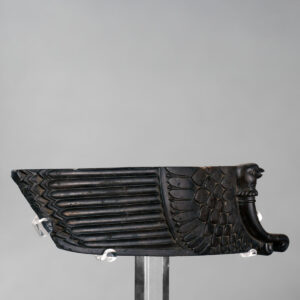
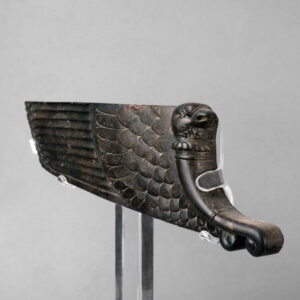
This schist wing, dating from the Achaemenid period circa 500–300 BC and measuring approximately 27.5 centimeters, exemplifies the sophisticated craftsmanship and symbolic motifs of the era. The carved stone fragment depicts a stylized wing, notable for its intricate workmanship and symbolic significance. Central to the design is a finely incised and carefully modeled relief of a phoenix, a mythological bird emblematic of renewal, immortality, and divine protection—an iconic motif in Persian art. The detailed depiction demonstrates the skillful use of incisions and relief carving, highlighting the artisans’ mastery of stonework.

Originally, this fragment would have been part of an elaborate furniture decoration, potentially serving as a decorative panel or ornament within a throne, throne room, or ceremonial setting. The use of schist, a durable and locally sourced stone, reflects both aesthetic preferences and the technical capabilities of Achaemenid artisans. The phoenix motif underscores themes of rebirth and divine authority, aligning with the rich iconography prevalent in Persian cultural and religious symbolism.

Today, this fragment preserves the fine craftsmanship and sophisticated iconography characteristic of Achaemenid decorative arts. Its preserved details provide valuable insights into the visual language and ceremonial ornamentation of the Persian elite, illustrating the grandeur and symbolic complexity that adorned the architecture and surroundings of the ruling class in the ancient empire. REFERENCE #

SI_PR_1019

CIVILIZATION

Persian, 500 B.C.E.

SIZE

H. 27.5cm

CONDITION

Fine Condition

PRICE

$27500

PROVENANCE

Jerusalem Private Collection, late 1970’s.