A Fine Egyptian Gypsum Mask of a Young GirlOut of stock

A Fine Egyptian Gypsum Mask of a Young Girl

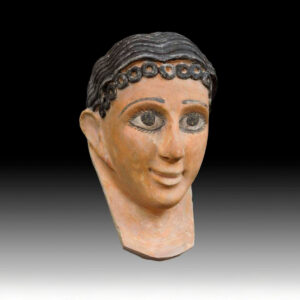
Plaster mummy portrait of a young girl, with slender features and tan flesh tones. Her full lips are pursed into a smile, rendering her features serene. Her black hair is molded with front row of small curls, and parted in the middle hair fashion. The eyes and eyebrows are stylistically delineated with black lines and beautiful lashes. She is wearing a pair of earrings. Areas of linen wrappings are preserved on the interior.


REFERENCE #

SI_EG_1053

CIVILIZATION

Ptolemaic period, 305 B.C.E. – 30 B.C.E.

SIZE

H. 29 cm

CONDITION

Professional restoration on the paint and the plaster, overall in fine condition

PRICE

SOLD

A Frieze Corner with Various Figures and Floral Patterns

Description

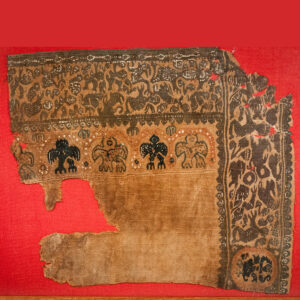
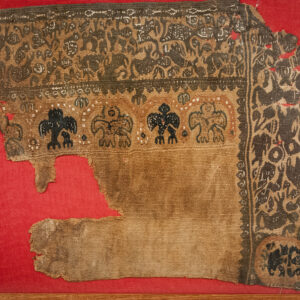
CORNER FRAGMENT – A frieze corner with framed, dark ornamental band on a light ground, densely filled with various floral patterns, kneeling human figures, fish and mythical creatures, plus filler motifs. At one end of the frieze, a small tondo with a dancing (?) human figure. Foliage-filled border at three frieze edges. Along one side inside the border another frieze of four and a half winged figures on talons.

Mounted on red linen ground and framed. Fragments of tunics, tabulae, etc. – Cf. Cat. Leipzig – 2002, 113 ff. nos. 157–173 with ill.

REFERENCE #

TX_EG_1006

CIVILIZATION

Egypt,

Coptic, 300 C.E. – 500 C.E.

SIZE

L. 26 cm, W. 22.5 cm

CONDITION

Fine Condition

PRICE

$1,500

PROVENANCE

Formerly Coll. Eduard Schällibaum, 1950’s–60’s, Chur. – On back of frames, alleged find spot “Upper Egypt”, inv. no. “716. 269. 476”.

A Seated Figure of the God Thoth as an Ibis

Description

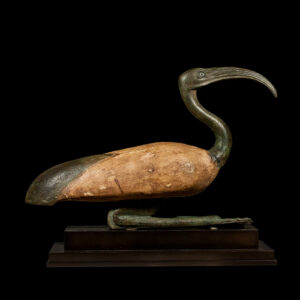
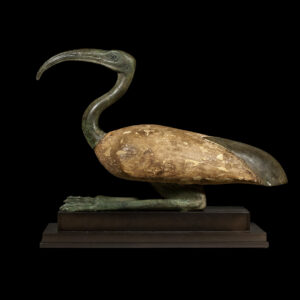
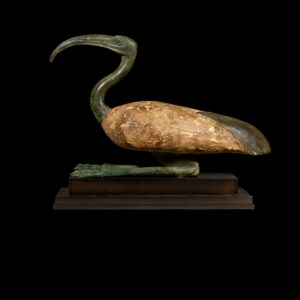
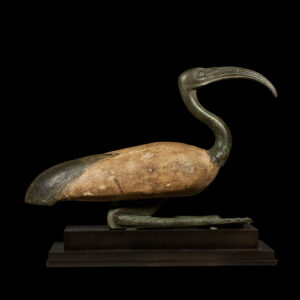
Great attention has been paid to the accurate and skillful rendering of the anatomic details of the ibis. Incised decoration replicates the structure of the bill, the eyes and the feathers and skin of the legs. The long, curved beak is harmoniously in proportion to the body, which has been simplified and streamlined to the point where it is an exercise in pure form. The bone structure of the beak and the head are represented through carefully nuanced modeling. The graceful contours of the neck flow into the body, of which only the outlines of wings, modeled on the underside as a slight ridge, are visible. The stylized mass of tail feathers was made separately and then inserted into the body.

Our bronze ibis would probably have been dedicated at a temple to Thoth, Egyptian god of writing, magic and wisdom, whose sacred animal was the ibis, and who often appeared as a man with the head of an ibis. As the creator of mankind, Thoth was one of the most important gods in the Egyptian pantheon. His main sanctuary was located in Hermopolis, a city that was known for its wealth.

Hermopolis benefited greatly from the rule of the Ptolemies, the Greek kings of Egypt, who commissioned large building projects for the city, thus solidifying Hermopolis’s identity as a luxurious resort town. A bronze such as our ibis would have undoubtedly been commissioned by a wealthy patron or king, who had access to the best workshops and quantities of good bronze. Our ibis is larger than the average ibis votives found: one of the closest parallels in terms of size and style is a Ptolemaic bronze ibis in the Brooklyn Museum (no. 49, 48).

Bibliography

ARNOLD, D., An Egyptian Bestiary, in Metropolitan Museum of Art Bulletin, New York, 1995.

ROBINS, G., The Art of Ancient Egypt, New Haven, 1998.

For other Late Period and Ptolemaic bronze ibis statuettes, see:

British Musem BM n. 64095 (1939, 0211.1)

Cleveland Museum of Art, no. 1940.667. 1/14

REFERENCE #

SI_EG_1046

CIVILIZATION

Egyptian, Late Dynastic Period. 26th Dynasty, 664 B.C.E. – 332 B.C.E.

SIZE

L. 40 cm

CONDITION

Fine condition

PRICE

Sold

PROVENANCE

Ex. Private American collection, gifted to him in 1964 by a doctor who acquired it while working in Sudan.

A Seated Figure of the God Thoth as an Ibis

Great attention has been paid to the accurate and skillful rendering of the anatomic details of the ibis. Incised decoration replicates the structure of the bill, the eyes and the feathers and skin of the legs. The long, curved beak is harmoniously in proportion to the body, which has been simplified and streamlined to the point where it is an exercise in pure form. The bone structure of the beak and the head are represented through carefully nuanced modeling. The graceful contours of the neck flow into the body, of which only the outlines of wings, modeled on the underside as a slight ridge, are visible. The stylized mass of tail feathers was made separately and then inserted into the body.

Our bronze ibis would probably have been dedicated at a temple to Thoth, Egyptian god of writing, magic and wisdom, whose sacred animal was the ibis, and who often appeared as a man with the head of an ibis. As the creator of mankind, Thoth was one of the most important gods in the Egyptian pantheon. His main sanctuary was located in Hermopolis, a city that was known for its wealth.

Hermopolis benefited greatly from the rule of the Ptolemies, the Greek kings of Egypt, who commissioned large building projects for the city, thus solidifying Hermopolis’s identity as a luxurious resort town. A bronze such as our ibis would have undoubtedly been commissioned by a wealthy patron or king, who had access to the best workshops and quantities of good bronze. Our ibis is larger than the average ibis votives found: one of the closest parallels in terms of size and style is a Ptolemaic bronze ibis in the Brooklyn Museum (no. 49, 48).

Bibliography

ARNOLD, D., An Egyptian Bestiary, in Metropolitan Museum of Art Bulletin, New York, 1995.

ROBINS, G., The Art of Ancient Egypt, New Haven, 1998.

For other Late Period and Ptolemaic bronze ibis statuettes, see:

British Musem BM n. 64095 (1939, 0211.1)

Cleveland Museum of Art, no. 1940.667. 1/14


REFERENCE #

SI_EG_1046

CIVILIZATION

Egyptian, Late Dynastic Period. 26th Dynasty, 664 B.C.E. – 332 B.C.E.

SIZE

L. 40 cm

CONDITION

Fine condition

PRICE

Sold

PROVENANCE

Ex. Private American collection, gifted to him in 1964 by a doctor who acquired it while working in Sudan.

An Egyptian Mummy Mask

Description

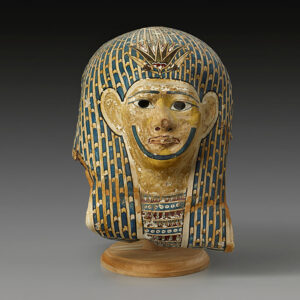
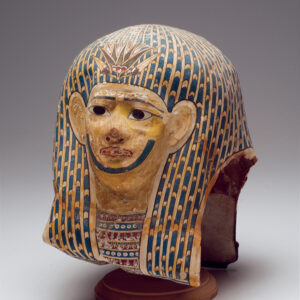
Made of cartonnage – a medium consisting of layers of fibers – this mummy mask features a broad foliate and beaded collar. The wig is decorated with an open lotus blossom on the forehead and a scarab on the crown. The cheek straps and other details are painted in blue, purple, red, pink and green on a yellow ground.

REFERENCE #

SI_EG_1049

CIVILIZATION

Egyptian, 100 C.E.

SIZE

H. 33 cm

CONDITION

Some normal areas of edge losses, mostly minor; a few open splits and some areas of the interior have been strengthened with a linen backing. Some normal minor paint flakes. Lower front portion of wig is curled under; the very tip of the nose chipped.

PRICE

Sold

PROVENANCE

Private NYS collection, ex. Sotheby’s, Sale 5464, lot 250, May 30th, 1986

Banded Alabaster Egyptian Mace Head

Description

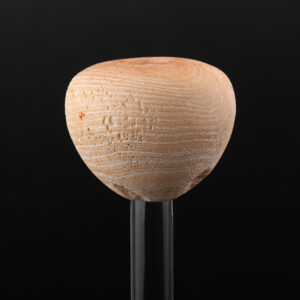
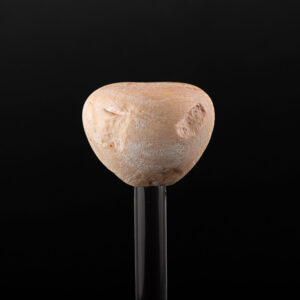
This commanding alabaster mace head exemplifies the artistry and technical skill of Egyptian stone‑workers of the Middle Bronze Age. Crafted from fine, dense alabaster, the piece presents a rounded, slightly pear‑shaped mass terminating in a short, tapering socket for hafting; its surfaces are smoothly finished to reveal the stone’s subtle veining and a soft, satin-like luster. Measuring approximately [dimensions available on request], it is a compact yet powerfully rendered implement.

The most striking feature of the mace head is its sculptural silhouette and the careful modulation of form between the striking face and the haft socket, which together create a balanced, purposeful object. The workmanship demonstrates mastery of stone‑shaping techniques, with precise contouring and evidence of controlled tool work around the socket and perimeter. Minor surface abrasions and faint impact marks may be present, consistent with functional use, while surviving tool marks are minimal and secondary to the overall polished presentation.

This object likely served both practical and symbolic roles: employed as a percussive weapon in conflict or as a status emblem and ceremonial object signaling authority and power. The selection of alabaster—a prized material—speaks to the prominence of its owner and the value attributed to finely

REFERENCE #

WP-PR-1002

CIVILIZATION

Egyptian, Circa 2100 B.C.E. – 1550 B.C.E.

Time Of Abraham

SIZE

L. 5cm

CONDITION

Fine condition

PRICE

$1850

PROVENANCE

The Baidun Collection

Egyptian Book of the Dead for Min-Her-Khetiu


Egyptian Book of the Dead for Min-Her-Khetiu

‘Book of the Dead’ is a modern term for a collection of magical spells that the Egyptians used to help them get into the afterlife.  They imagined the afterlife as a kind of journey you had to make to get to paradise – but it was quite a hazardous journey so you’d need magical help along the way.

Prior to the New Kingdom, The Book of the Dead was only available to the royalty and the elite. The popularity of the Osiris Myth in the period of the New Kingdom made people believe the spells were indispensible because Osiris featured so prominently in the soul’s judgment in the afterlife. As more and more people desired their own Book of the Dead, scribes obliged them and the book became just another commodity produced for sale.

From the New Kingdom through the Ptolemaic Dynasty (323 – 30 BCE) The Book of the Dead was produced this way. It continued to vary in form and size until c. 650 BCE when it was fixed at 190 uniform spells but, still, people could add or subtract what they wanted to from the text. A Book of the Dead from the Ptolemaic Dynasty which belonged to a woman named Tentruty had the text of The Lamentations of Isis and Nephthys attached to it which was never included as part of the Book of the Dead. Other copies of the book continued to be produced with more or less spells depending on what the buyer could afford. The one spell which every copy seems to have had, however, was Spell 125.

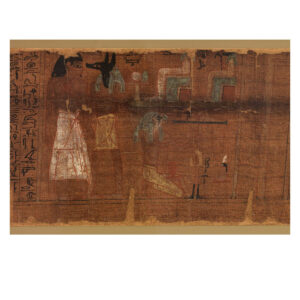
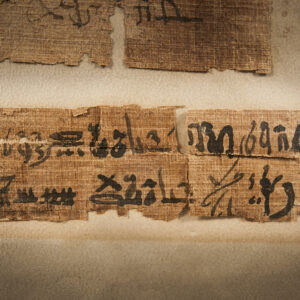
Featured here are two papyrus fragments from the Egyptian New Kingdom, 18th Dynasty (circa 1400 BCE) of an Egyptian Book of the Dead written for the Royal sandal-bearer of Isis, Min-Her-Khetiu:

The smaller papyrus sheet includes the painted figures of a woman and the dead man, their hands raised in adoration. Between them a column of hieroglyphs gives the name and title of the owner.  Seven columns of hieroglyphs in the center contain the opening of Chapter 7 headed ‘Chapter of Sailing in the Bark of Ra’.  Above this an accompanying vignette of a shallow boat containing the falcon headed Ra crowned with solar disc and flanked by wedjat eyes to signify health and security.  To the right four columns recounting part of Chapter 149,’The Fourteen Mounds’, the illustration above showing a pottery jar with liquid spilling from it.

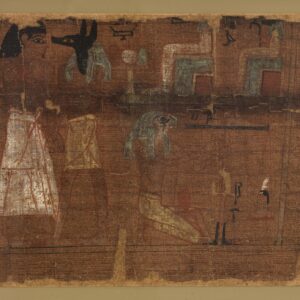
The longer sheet carries thirty columns of Chapter 125 ‘The Declaration of Innocence’ with a scene showing standing figures of Anubis with the dead man to the left of a kneeling falcon headed god (Horus though he is labelled Thoth) supervising the weighing of the heart against Maat.  Two seated gods above the scales represent the 42 gods who witness the judgement.  Two of the three columns in the center are from Chapter 81a ‘Spell for becoming a lotus’ and on the right side of the sheet are ten columns from the beginning of Chapter 144 ‘Address to the Keepers of the Underworld’ with the paired figures of the horned guardian and reporter of each gate shown at the foot of the column.

Other fragments from the same scroll can be found in the Cairo Museum and the Papyrus Museum, Syracuse, Italy.  This piece is the oldest illuminated manuscript of the Egyptian Book of the Dead in private hands, and among the oldest literary manuscripts (MSS) on papyrus.

Provenance:

Previously Maurice Nahman, Cairo, acquired 1930s; The Schøyen Collection, Norway.

Exhibited:

Kon-Tiki Museet, Oslo, 2002-3

Published Literature:

Barbara Lüscher, ‘Der Totenbuch- Papyrus des Minherchetiu‘ in Studien zur Altägyptishen Kultur, Band 36, 2006.

FOOTNOTES:
1.) The British Museum

2.) Ancient.eu


REFERENCE

#SC_EG_1001

CIVILIZATION

New Kingdom. 18th Dynasty, c.1400 B.C.E.

SIZE

H. 14 x L. 33.2 cm and H. 15.5 x L. 88.8 cm

CONDITION

Fine condition

PRICE

Available Upon Request

PROVENANCE

Maurice Nahman, Cairo, acquired 1930s; The Schøyen Collection, Norway. Exhibited: Kon-Tiki Museet, Oslo, 2002-3 Literature: Published: Barbara Lüscher, ‘Der Totenbuch- Papyrus des Minherchetiu’ in Studien zur Altägyptishen Kultur, Band 36, 2006.

Neolithic Flint Dagger

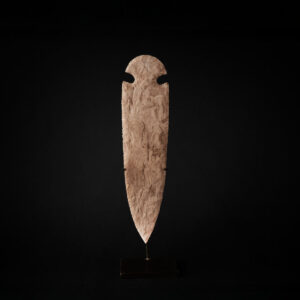
This exceptional Neolithic flint dagger exemplifies the sophisticated stone tool craftsmanship of early Egypt or the broader Levantine region, dating from approximately 6000 to 3150 BCE. The elongated, pointed form showcases skillful knapping and pressure flaking techniques, with a smooth surface and subtle signs of use wear, indicating its original function as a utilitarian weapon or ceremonial object. Made from high-quality flint, its natural color ranges from light beige to pale brown, with a finely worked edge that demonstrates the precision and artistry of Neolithic artisans. This piece retains excellent preservation and exhibits the characteristic features of early prehistoric tools—both functional and symbolic. Its history and craftsmanship make it a noteworthy acquisition for collectors, museums, or institutions seeking authentic artifacts from one of the most significant periods in human history. An opportunity to acquire a unique and visually striking example of ancient stone technology with profound cultural and archaeological significance.

REFERENCE #

ST-CL-1003

CIVILIZATION

Egyptian, 4000 B.C.E.

SIZE

H 25 cm

CONDITION

fine condition.

PRICE

$8500

Papyrus Fragments of Egyptian Book of the Dead from Ptolemaic Period

Book of the Dead’ is a modern term for a collection of magical spells that the Egyptians used to help them get into the afterlife.  They imagined the afterlife as a kind of journey you had to make to get to paradise – but it was quite a hazardous journey so you’d need magical help along the way.

Prior to the New Kingdom, The Book of the Dead was only available to the royalty and the elite. The popularity of the Osiris Myth in the period of the New Kingdom made people believe the spells were indispensible because Osiris featured so prominently in the soul’s judgment in the afterlife. As more and more people desired their own Book of the Dead, scribes obliged them and the book became just another commodity produced for sale.

In the same way that publishers in the present day offer Print on Demand books or self-published works, the scribes offered different “packages” to clients to choose from. They could have as few or as many spells in their books as they could afford. Bunson writes, “The individual could decide the number of chapters to be included, the types of illustrations, and the quality of the papyrus used. The individual was limited only by his or her financial resources” (48).

From the New Kingdom through the Ptolemaic Dynasty (323 – 30 BCE) The Book of the Dead was produced this way. It continued to vary in form and size until c. 650 BCE when it was fixed at 190 uniform spells but, still, people could add or subtract what they wanted to from the text. A Book of the Dead from the Ptolemaic Dynasty which belonged to a woman named Tentruty had the text of The Lamentations of Isis and Nephthys attached to it which was never included as part of the Book of the Dead. Other copies of the book continued to be produced with more or less spells depending on what the buyer could afford. The one spell which every copy seems to have had, however, was Spell 125.

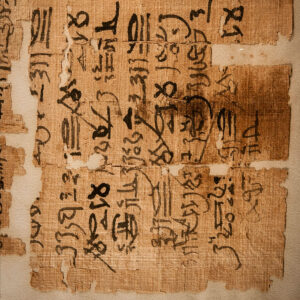
Featured here are several papyrus fragments of the Egyptian Book of the Dead from Egypt’s Ptolemaic Era (305 – 30 BCE).  Examining Egyptian art during these 300 years reveals strong continuities in its traditions but also interactions with Greek art, whose forms and styles swept the world with Alexander’s armies. The encounter of the two cultures had many aspects and phases, and is easiest to comprehend by looking first at the new ruling class, its involvements and concerns, and then at religion and the arts in the greater land of Egypt.


FOOTNOTES:
1.) The British Museum

2.) Ancient.eu

3.) Met Museum

REFERENCE #

MS_EG_1003


CIVILIZATION

Egyptian

SIZE

Varying…

CONDITION

Fine Condition

PRICE

Price upon request

PROVENANCE

Baidun Collection

Woven Fragment with Dancing Eros

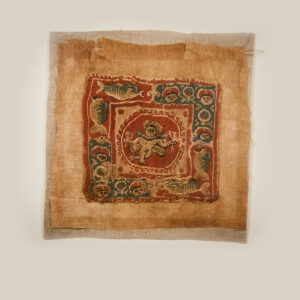
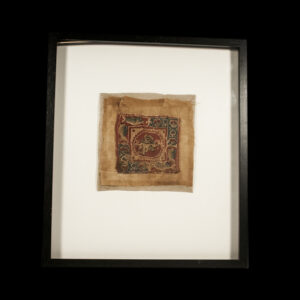
Woven Fragment with Dancing Eros (?) . Multi-coloured cloth in beige, green and red. Fine-threaded.
The tondo with “running dog” frame is set inside an almost square, red and green frame with an ornamental band composed of fishes and human heads. At its centre is a nude, wreathed figure with crotales, branches and wineskins.

Sewn onto beige linen and framed. Fragment of a tunic or tabula. – Cf. Cat. Leipzig – 2002, 66, 71 nos. 1, 15 with illus.

REFERENCE #

TX_EG_1003

CIVILIZATION

Egypt, Coptic, 400 C.E. – 600 C.E.

SIZE

L. 10 cm, W. 10 cm

CONDITION

Fine Condition

PRICE

Price
$2,000

PROVENANCE

Coll. A. and E. Offermann, Cologne (1965-2012). – Formerly Coll. Bareiss. Thereafter auction Neumeister, Munich, ca. 2009.